

Plans to convert two prominent downtown office towers into hundreds of residential units are advancing through the City of Denver’s development review process, marking one of the largest adaptive-reuse proposals currently under consideration in the central business district.
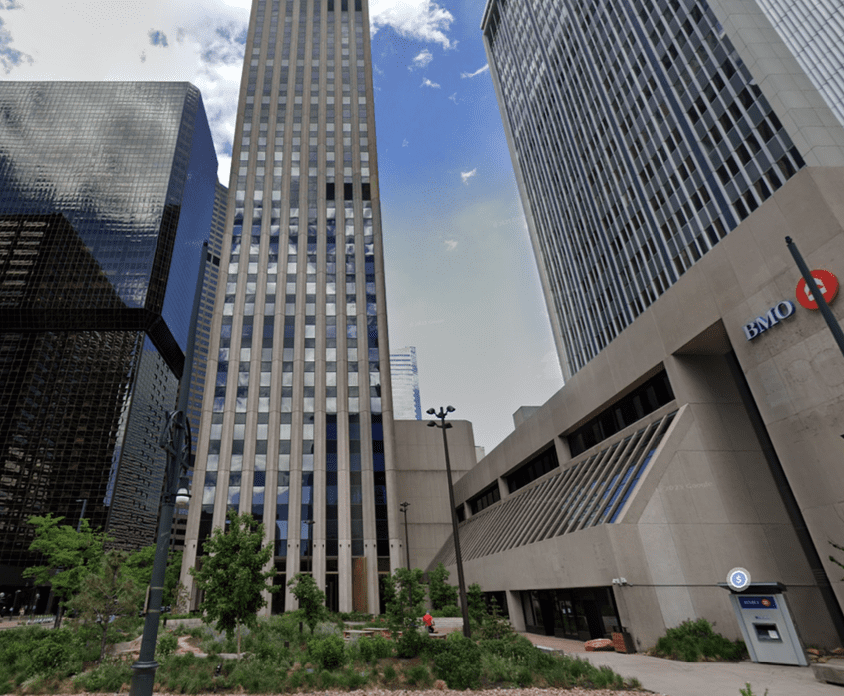
Collectively branded as the High Fidelity project, the proposal targets the office buildings at 621 and 633 17th Street. According to concept plans submitted to the city on behalf of The Luzzatto Co., the project would transform nearly 970,000 square feet of existing commercial space into a mixed-use residential development anchored by approximately 700 apartment units, along with retail and amenity space designed to activate the street level. The two towers are connected by a shared courtyard, an interconnected basement, and a link building, together occupying an entire block in Upper Downtown.
HLW International, a design firm headquartered in New York City, submitted the concept plans. Denver-based MDP Engineering Group is named as the MEP Engineer, and R&R Engineers as the civil engineer for the project. Thornton Tomasetti is providing structural and façade engineering and façade access services for the project.
City filings outline a comprehensive interior conversion of both towers, with no major expansion to the existing building envelopes, to comply with historic preservation regulations. The plans call for reconfiguring upper floors into multifamily units—a mix of studios to 3-bedrooms—while incorporating resident amenities such as shared lounges, fitness facilities and co-working areas. Ground-floor spaces are slated for retail or food-and-beverage uses, intended to contribute to a more active pedestrian environment along 17th Street. A daycare facility is also planned as part of the renovation.
In August, The Luzzatto Co. submitted a funding request to the Denver Downtown Development Authority, the tax-increment financing district that allocates millions of dollars toward downtown revitalization efforts. According to the application, the project carries an estimated total cost of $319.66 million, with the developer seeking approximately $62.97 million in support from the DDDA.
The High Fidelity proposal comes as Denver continues to grapple with elevated office vacancy rates and shifting tenant demand patterns. Adaptive reuse has emerged as a key strategy for repositioning aging office inventory while addressing the city’s housing needs and downtown revitalization goals.
The project remains in the city’s concept and site development review stages. As part of that process, planning officials will evaluate zoning compliance, building code transitions, infrastructure capacity and public-realm improvements before building permits can be issued.
If approved as proposed, High Fidelity would rank among the most substantial office-to-residential conversions in Denver’s history—signaling continued momentum behind large-scale adaptive reuse in the urban core.