

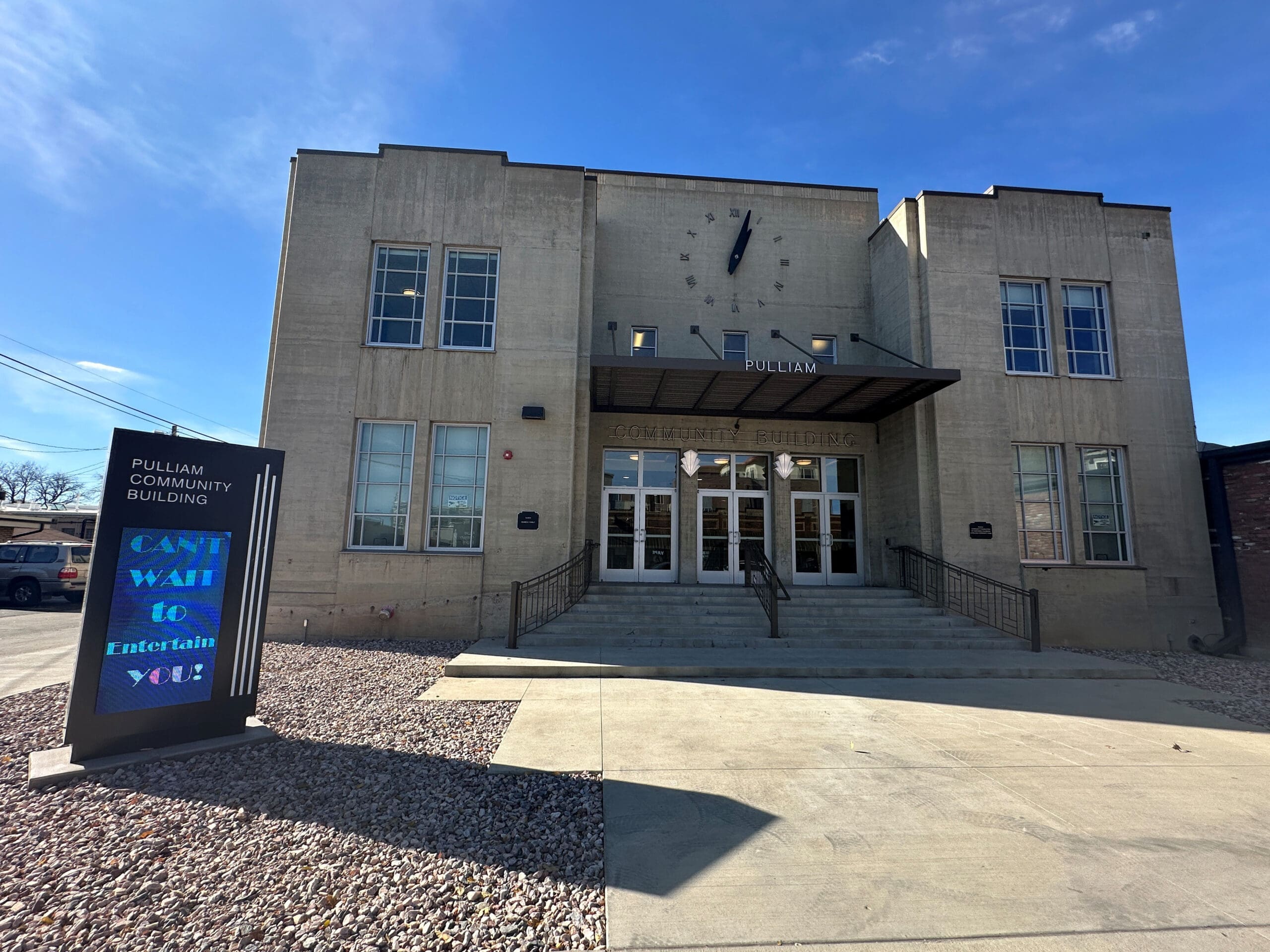
360 Engineering, a full-service mechanical engineering firm working on projects of all sizes in Colorado and across the U.S., is proud to be part of a team renovating the City of Loveland’s Pulliam Community Building. The primary renovation effort, including full MEP upgrades along with architectural finishes throughout the building, was completed in November. 360 Engineering is working with the architecture firm Form+Works Design Group on the building renovations.
“It’s an honor and pleasure to restore this cornerstone of the City of Loveland’s civic pride and cultural life to its original form and architectural significance,” said Kerri Zoetewey, lead project engineer at 360 Engineering. “We greatly appreciate our partnership with Form+Works Design Group, as their team preserves the architectural integrity and 360 Engineering upgrades the building’s mechanical and plumbing systems. It has been a very rewarding team effort overall.”
The Pulliam Community Building in downtown Loveland first opened in 1938. Funded in part by philanthropist D.T. Pulliam and built as a Works Progress Administration (WPA) project during the Great Depression, the building was originally conceived as a multi-use community gathering space. Over the decades, it served as a venue for community events, dances, theater productions, and even housed city council meetings.
After falling into disrepair and closing in 2010 due to code compliance issues, Loveland residents rallied to preserve and restore the building, recognizing its historical and cultural significance.
The recent renovation honors the building’s rich history while equipping it with modern systems and amenities for renewed community use. The primary objective of the project was to reopen the building as an assembly space, preserving its architectural integrity while upgrading infrastructure to meet current codes.
One of the most significant engineering challenges was retrofitting the mechanical systems within a historic structure with limited ceiling space (or none). Energy recovery units were added to address the ventilation requirements of modern codes, particularly in assembly areas that previously had no mechanical ventilation. These units supply fresh air to the basement meeting hall, first-floor support areas, and second-floor offices. Louvers were integrated into existing window openings, and a Variable Refrigerant Flow (VRF) system was installed to provide heating and cooling to the majority of the building, allowing for minimal ductwork and more discreet piping routes, preserving the building’s historical features.
The auditorium, which spans the first and second floors, is now served by two large rooftop units situated in a new mechanical yard behind the building. Air distribution was redesigned for better efficiency and occupant comfort: previously reliant on high-mounted stage grilles, the new system uses exposed ductwork along the exterior walls. On the first floor, ducts were routed between the concrete structure, while on the second floor, spiral ducts were mounted on the wall and coordinated with structural and fire protection systems.
This project reflects the community’s dedication to preserving Loveland’s heritage while breathing new life into one of its most iconic landmarks. The Pulliam Building now stands ready once again to host the community it has long served.