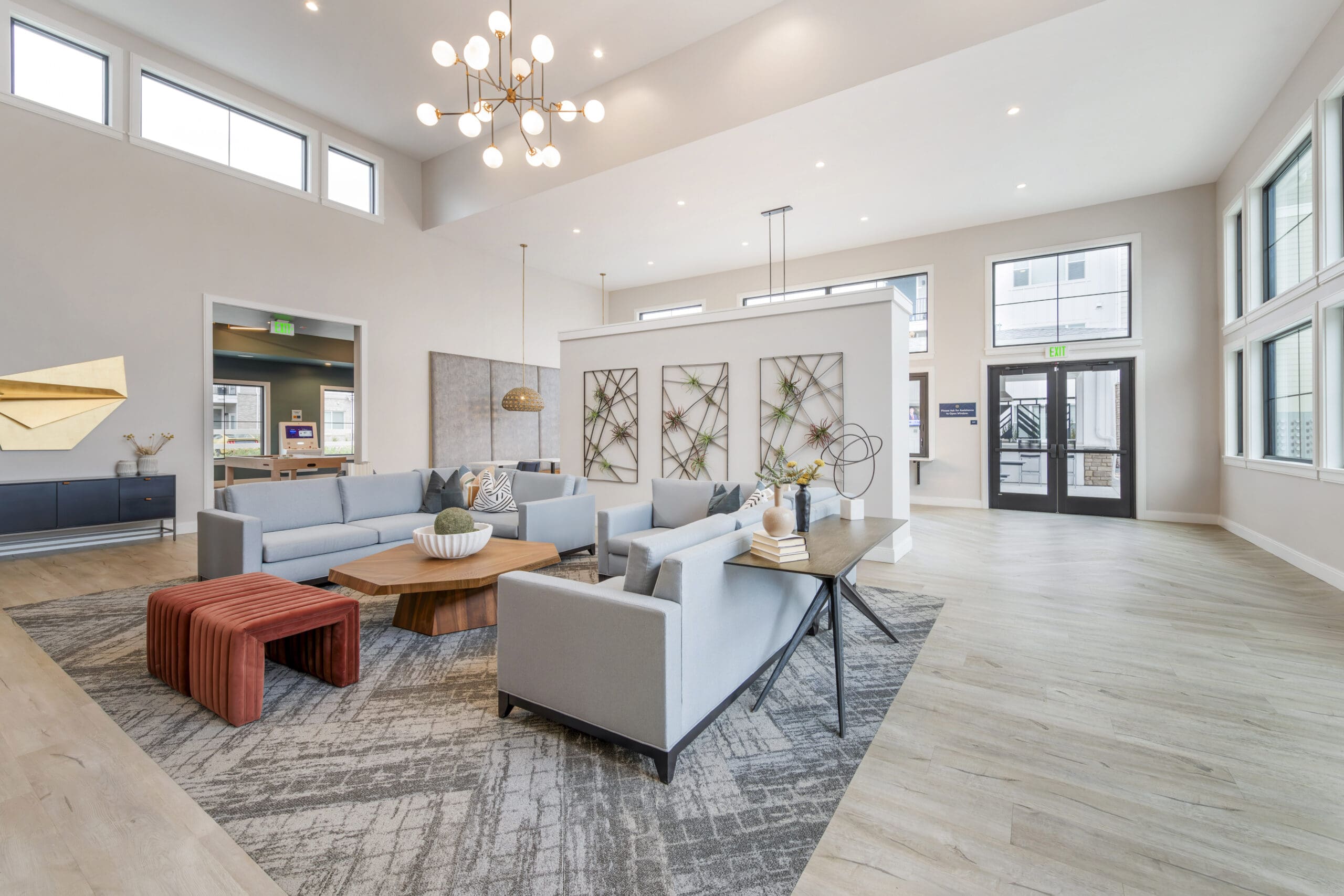



CBRE has just released its 2026 Market Outlook for Denver, analyzing the office, industrial, retail, multifamily and life sciences markets as we enter a new year.
OFFICE MARKET OUTLOOK
CLASS A & PRIME BUILDINGS WILL CONTINUE TO OUTPERFORM, SEE VACANCY DECREASE
With vacancy rates at 19.9% and 27.2%, respectively, as of year-end 2025, prime and Class A buildings have begun to stabilize and reached a point of inflection. This year should see a slow, gradual decline in vacancy among these buildings, resulting in a wider spread between Class A and Class B and C properties. Tenants will continue to prioritize high-quality spaces, driven by the importance of the in-office experience and convenient access to amenities for both employees and decision-makers.
NEW CONSTRUCTION TO REMAIN LIMITED, CONCENTRATED IN CHERRY CREEK
The construction pipeline will remain limited for the foreseeable future and stay concentrated in Cherry Creek, with many projects still requiring a sizable pre-commitment to break ground. Cherry Creek will maintain its position as one of the best-performing submarkets nationally due to its high-end amenities, walkable street environment and strong mixed-use presence. Other areas—including Downtown’s LoDo, Boulder and North DTC in the Southeast—are also projected to see increased leasing momentum for many of the same reasons. Prime and Class A buildings in these areas could see rent growth reach 5% in 2026. Marketwide, rent growth expectations for 2026 are in the 1%-2% range.
DISTRESSED BUILDINGS DRIVING SALES ACTIVITY; NEW OWNERSHIP OPPORTUNITIES AND REDUCED LEASABLE SUPPLY
As the number of distressed buildings increases through 2026, primarily due to refinancing challenges and further tenant migration to better quality space in more desirable locations, new ownership opportunities will be more widespread. Tenants will likely be presented with more affordable rent options but may have to sacrifice on tenant improvement allowances. More distressed buildings are being targeted for multifamily conversion. Several projects in the Southeast submarket have already commenced, with several more slated to begin in 2026. In Denver, three projects recently received Denver Downtown Development Authority (DDDA) special loans that will better enable these projects to move forward with conversion plans, removing unleasable space and contributing to the submarket’s declining vacancy rate.
KEY TAKEAWAYS
FOR OWNERS
- Owners of well-capitalized, Class A buildings with attractive amenities in desirable locations are best positioned to attract tenants and maintain high occupancy.
- Lower quality, Class B and C buildings that are unable to undertake capital improvements or offer sufficient tenant improvement allowances should be able to retain cost-conscious tenants but will be challenged to fill vacant space.
- Tenants are investing in high-quality space to optimize the in-office experience and encourage a greater return to the office. To attract smaller users, spec suites have proved popular.
- Landlords must be prepared to negotiate early with larger tenants and offer competitive incentives to secure renewals in a tenant-favorable market.
FOR TENANTS
- Most tenants have the upper hand in negotiations to lease new space or renew leases. Space upgrades do come at a premium but are far more affordable than in coastal markets.
- With limited new construction, the availability of Class A+ and prime space in desirable locations is expected to decline gradually. To secure the best options, larger tenants should proactively address upcoming lease expirations and leverage their position while vacancy rates are high.
- While rents are expected to remain largely stable, some owners will be willing to undercut the market to secure deals, including renewals and shorter-term new leases. Tenants in distressed buildings will have greater leverage in lease negotiations.
INDUSTRIAL MARKET OUTLOOK
VACANCY RATES WILL CONTINUE THEIR SLOW DECLINE
After stabilizing in the first half of 2025, vacancy rates marketwide are poised to continue their gradual decline in 2026, but some bifurcation will persist. Big-box buildings will see vacancy drop into the single digits for the first time since mid-2022. Vacancy in mid-sized buildings will likely remain flat as some supply is still forthcoming, while buildings below 50,000 sq. ft. could see slight additional increases in vacancy as users upgrade to better space and consolidate or relocate their operations due to shifting local business and economic conditions.
NEW SPECULATIVE DEVELOPMENT WILL REMAIN LIMITED
To close out 2025, there was 3.3 million sq. ft. of industrial space under construction. This is down from a peak of 10.3 million sq. ft. at the end of 2021 and represents a level last seen in 2016. Speculative development accounts for 2.3 million sq. ft., or 69.9% of the total, with the remaining being build-to-suit. With more than 1.6 million sq. ft. anticipated to deliver in the first half of 2026 and fewer significant ground breakings anticipated, the supply pipeline is expected to further decline in 2026, which will undoubtedly put downward pressure on vacancy rates.
FLIGHT TO QUALITY TREND WILL CONTINUE
Through the first three quarters of 2025, Class A properties amassed 4.8 million sq. ft. of positive net absorption, while Class B and C buildings recorded negative net absorption of 2.2 million sq. ft. Although the rate of new Class A deliveries is slowing, approximately 10.0 million square feet of existing vacant, Class A space remains
available, providing ample opportunity for the flight to quality trend to persist.
KEY TAKEAWAYS
FOR OWNERS
- The decline in both new construction and vacancy will lead to more owner-favorable conditions by year-end 2026. Tenants’ flight to quality and demand for new Class A space, combined with more owner-user demand, will continue to drive big-box net absorption.
- There is some increased hesitancy among tenants to execute expansions and absorb relocation costs, giving landlords slightly more leverage in renewal negotiations.
FOR TENANTS
- Taking rents are expected to remain largely stable, with landlords continuing to offer slightly elevated rent abatement as leasing fundamentals remain mostly tenant-favorable. Rent growth will pick up and be more widespread as more vacant space is absorbed.
- There will be more opportunities for users to purchase real estate. Owners are putting more recently completed vacant buildings up for sale to cater to the
- recent uptick in owner-user demand. The increase in vacancy among smaller buildings also provides more ownership opportunities for local companies looking to manage their real estate costs.
MULTIFAMILY MARKET OUTLOOK
WAVE OF NEW CONSTRUCTION TO DROP SHARPLY AFTER 2026; RENTER DEMAND TO REMAIN STABLE
After a surge in new construction, multifamily deliveries over the past five years were up 27.6% compared to the prior five-year period. While new deliveries are expected to remain elevated through 2026, new construction completions will quickly decelerate in 2027. From a demand standpoint, the multifamily market entering 2026 is trending back toward pre-peak levels as population growth and in-migration slow but remain sufficient to support modest occupancy gains.
GREATER AFFORDABILITY FOR RENTERS
As the recent wave of multifamily units entered the market, renter affordability has slightly improved, with rent growth having receded in 2025. This trend is expected to continue across the metro area as heightened construction deliveries persist and support further aggressive renter concessions in 2026. Still elevated mortgage rates, stubbornly high home prices and a steep decline in homebuilding, with permits down 44.7% as of September compared to the recent 2021 peak, continue to deter would-be homebuyers, keeping more renters renting for longer.
STRONGER SALES ACTIVITY
Sales activity is expected to increase in 2026 as interest rates ease and 10-year Treasury rates further stabilize. Investors who looked to offload their positions during the high-rate environment and have achieved successful lease-up are more inclined to list their assets, driving higher transaction volume across the Denver metro. Lower borrowing costs will improve deal feasibility and attract a wider range of buyers, further bolstering sales volume.
KEY TAKEAWAYS
FOR OWNERS
- Renting continues to be far more affordable than owning in metro Denver. With the limited supply of new single-family homes and condos available to
- first-time homebuyers, multifamily renter demand is expected to remain largely stable across most areas and product types.
- Legislation on the inclusion of affordable units in municipalities and cities across metro Denver, combined with elevated materials and labor costs, are making new development less viable until overall supply pressures ease.
- Even as new supply begins to decline more sharply in 2027, developers will be disciplined in identifying sites to start new projects, given high construction costs and the likelihood of a supply overhang still present in some areas.
FOR TENANTS
- A sustained wave of urban and suburban units will reach completion in 2026, enabling more renters to relocate and upgrade their housing at slightly more affordable rents as owners offer attractive concessions to secure occupancy.
- As of Q3 2025, the monthly cost of owning a home compared to the cost of renting remains elevated against historical levels. At a spread 6.9% greater than a year ago, it is currently $2,048 cheaper per month to rent than own.
- The state’s HB25-1090 bill goes into effect on Jan. 1, 2026, protecting renters in Colorado from “junk fees” by providing greater clarity on pass-through expenses and a more transparent leasing marketplace.
RETAIL MARKET OUTLOOK
STABLE MARKET FUNDAMENTALS EXPECTED TO PERSIST EVEN AS CONSUMER DEMAND NORMALIZES
Despite broader expectations of a mild softening in consumer spending nationally and similar, more moderate job growth locally, Denver’s retail market is expected to experience near-identical market conditions in 2026. Healthy leasing fundamentals attributed to limited new supply and resilient consumer demand have translated to higher investment activity, especially as other major property types are experiencing elevated vacancy and oversupply.
SUBURBS REMAIN THE FOCUS OF ACTIVITY AND THE MARKET’S LIMITED NEW SUPPLY; AVAILABILITY WILL REMAIN LOW
Retail space availability remained near its all-time low in 2025 and is expected to see only minimal fluctuation in 2026. Limited new supply, which is largely comprised of suburban grocery-anchored and neighborhood and strip centers, will not put substantial upward pressure on availability since many of these locations are in areas with substantial residential development and population growth. The successful backfilling of vacant big-box space remains a prominent theme and has helped keep availability low.
DOWNTOWN RECOVERY SEEING SOME MOMENTUM
Downtown Denver saw increased pedestrian traffic and more new ground-floor retailers in 2025, but the slow recovery in return-to-office levels and high construction and labor costs remain as challenges. The recent 16th Street improvement project, completed in the summer of 2025, has been successful in bringing more people to downtown, providing more opportunities for new retailer storefronts in 2026.
KEY TAKEAWAYS
FOR OWNERS
- Most owners will benefit from stable rent increases as availability largely remains at near-record low levels across metro Denver.
Backfill demand for larger big-box spaces remains strong, given the relatively tight supply of these formats, especially in desirable locations. - Owners with older, commodity assets will have to rely more on rent abatement and concessions as some retailers become more location and rent-sensitive.
FOR TENANTS
- Tenants will have opportunities to backfill big-box space as additional established retailers, albeit at a slower pace, reduce store counts and face obsolescence due to shifting consumer behaviors.
- Higher operating costs will remain a challenge due to ongoing wage increases and increased build-out costs. More tenants are identifying opportunities in downtown Denver as rent reductions and incentives help offset these higher operating costs.
LIFE SCIENCES MARKET OVERVIEW
NEW CONSTRUCTION PIPELINE EXPECTED TO FURTHER EASE
The additional completion of converted life sciences space through the first half of 2026 will drop the new construction pipeline to its lowest level since 2021. No new life sciences purpose-built projects are likely to break ground in the coming year, and the pace of conversions will also slow considerably.
VACANCY HAS STABILIZED AND WILL TREND DOWNWARD IN 2026
Life sciences vacancies began to stabilize in mid-2025 and is anticipated to trend lower in 2026 due to the absence of newly converted vacant space being added to the market. Similar to other secondary life sciences markets, Denver/Boulder did not intensely overbuild, with the volume of space under construction over the past several years barely exceeding 500,000 sq. ft. at its peak, while the market’s direct vacancy topped out at just 12%.
SIGNS OF A REBOUND IN ACTIVITY; OWNERS BENEFITTING FROM ‘DEEP TECH’ USER DEMAND
Several significant leasing transactions were recently executed, the largest of which will absorb new speculative construction. Landlords are benefiting from rising demand among ‘deep tech’ companies, particularly those operating in the quantum computing sector. Moreover, the life sciences sector is experiencing a robust rebound in venture capital funding, with $228 million invested in Q3 2025
KEY TAKEAWAYS
FOR OWNERS
- Owners are benefiting from increased sources of alternative demand that requires similar infrastructure and specifications as life sciences lab space. In the Denver/Boulder market much of that demand is coming primarily from the quantum computing sector.
- Easing new construction and the recent execution of several larger leases will drive vacancy lower in 2026.
FOR TENANTS
- Landlords have become more willing to do shorter-term leases to secure occupancy in recently converted space.
- Rents and concessions have largely remained stable, with limited changes expected in 2026.