

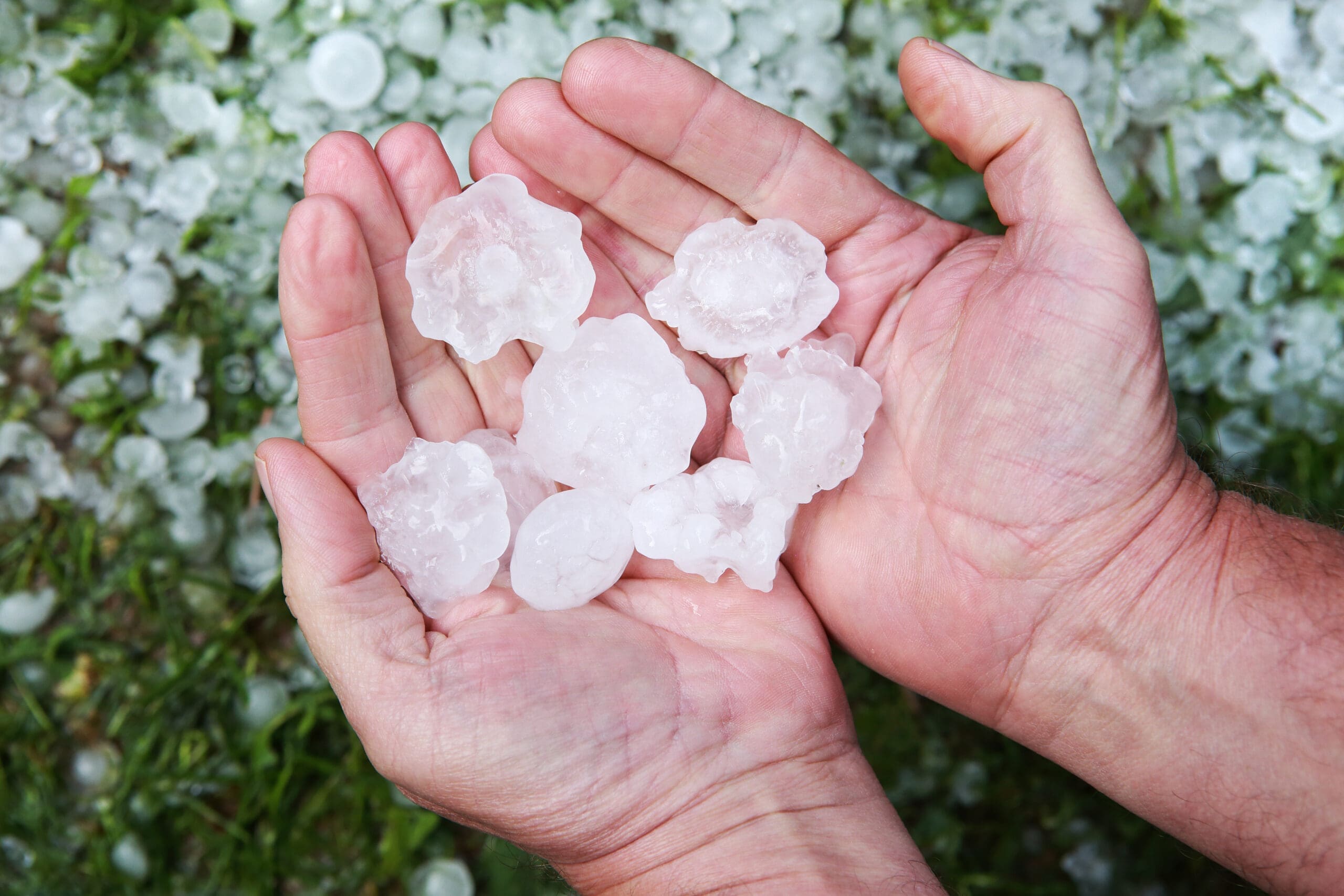
There’s one consistent hazard in Colorado every year—the return of hail season—and your business should be prepared. Colorado’s infamously dangerous and costly hail season begins mid-April and runs throughout the summer and into September.
Nationwide, though 2024 had fewer hailstorms, severe hail increased by 21% compared to 2022. In looking at data from 2012-2021 from the National Oceanic and Atmospheric Association, Colorado had the second-highest total property damage ($1.2 billion) of all states. Only Texas has higher property damage rates. Between 2017 and 2019, of the top five U.S. cities with the most hail loss claims, two were in Colorado—Colorado Springs and Denver—and 14 % of all hail claims in the U.S. were in Colorado.
While you can’t predict the unexpected, business owners can better prepare themselves with preventive measures against these dangerous storms. At Society Insurance, we have compiled best practices for establishments to protect their businesses against hail storms and other natural seasonal disasters to avoid costly storm damage insurance claims.
Inspect your Roof Every Year or Two to Prevent Indoor Storm Damage
Not only does a regular roof inspection extend the life of your roof, saving you money long-term, it allows you to troubleshoot and remedy any issues such as split shingles, loose or broken roofing material, rusty metal and sagging. It is much easier to fix a small roof problem than a collapsed roof or burgeoning leak that can cause even more damage inside.
Address Drainage Problems Prior to Storm Season
Check your gutters and building drainage before the storm season begins. If your gutters are due for a cleaning, contact a local gutter company to complete the job. Additionally, if your roof has been damaged, your gutters may have been also. Neglected gutters spell disaster as they accumulate debris and standing water. Standing water can easily overflow into your foundation, potentially flooding the basement and shutting down your establishment.
Secure Outdoor Items to Prevent Wind Damage
Any grills, picnic tables and/or lawn furniture can become projectiles in high wind scenarios. “Batten down the hatches,” as they say—you don’t want your patio umbrella to go spiraling through the air in the midst of a summer storm. Consider securing patio furniture with steel security cables if you cannot safely store it.
Trim your Trees to Prevent Storm Damage
While dead trees and dead branches are a liability all of the time, dead branches are more likely to fall during heavy storms and gusting winds. This can be hazardous to you, your employees, patrons and the building. From tree limbs falling on the roof to dead branches getting tangled in power lines, a well-maintained property will, again, help you avoid costly storm damage insurance claims.
Create a Storm Preparation Checklist
- Have storm supplies inside the building and in working order. This includes flashlights, backup generators, water bottles, battery-operated weather radio, first-aid kit, blankets, extra batteries, and a tool set.
- Maintain a current contact list for state and local entities and ensure employees know where it is.
- Have an emergency plan in place for severe weather and make sure employees are properly trained in what to do.
Have a Plan for Power Loss
A plan for a power loss should include:
- Who to contact in the case of a power outage and their contact information
- Where supplies are kept (i.e. batteries, weather radio, flashlights, first-aid kit, etc.)
- Instructions for employees to keep freezers and refrigerators closed
- Compliance with generator safety measures by only using outdoors and away from windows
- Notice that a gas stove should not be used as a heating source
With the worst of this year’s hail season possibly still ahead of us, there’s never been a better time to prepare for a possible hail storm, especially if you call “Hail Alley” home. Business owners can mitigate damage to their buildings, payroll, and bottom line by investing a little time in preventive measures.
For more information on Society Insurance, please visit: https://www.societyinsurance.com/.
This information is provided as a convenience for informational purposes only. This information does not constitute legal or professional advice. It is provided to assist you in recognizing potential unsafe work problems or conditions and not to establish compliance with any law, rule or regulation.