

By Graham Frank, Breckenridge Grand Vacations and The Finale Development Partnership
The Mountain West may look like one of the country’s most expansive regions, but in real estate development, the reality is far more constrained. In many of the region’s most desirable mountain communities, the land buyers want most is also the hardest to develop. Geographic limitations, land-use regulations, infrastructure requirements and community priorities are making it increasingly challenging to deliver new construction in established destinations like Breckenridge, Aspen and Deer Valley.
Development Constraints Go Beyond Topography
Development constraints across the Mountain West extend well beyond topography. Communities must balance growth with density limits, environmental protections, infrastructure capacity and efforts to preserve local character. In many established mountain destinations, zoning and development policies further limit where and how new projects can take shape.
Breckenridge’s Upper Blue Basin, for example, is subject to planning policies addressing density, backcountry protection and development rights. As a result, finding an available parcel does not necessarily mean finding a viable development site.
Limited Supply Is Changing Market Dynamics
In Park City, new construction continued to command a premium through the fourth quarter of 2025, as buyers favored new or recently renovated homes over properties requiring significant work. New construction accounted for 60% of sales in Jordanelle and 40% in Heber Valley.
In Aspen, residential inventory remained nearly 40% below 2019 levels, even as sales slowed, underscoring the market’s persistent supply constraints.
Chalet Alpina is revitalizing Aspen Mountain’s historic Lift One base with a new ski lift on Dean Street. After acquiring the site in 2015, developers Irongate Group and HayMax set aside previously approved entitlements to pursue a more ambitious vision of returning the lift to its original, lower location. The effort required years of additional design work and coordination with the City of Aspen and Aspen Skiing Company, culminating in a 2018 master plan, 2019 voter approval of the broader Lift One Corridor redevelopment and approval from the Colorado Passenger Tramway Safety Board for the new lift location. With entitlements finalized and permits recently secured, construction is now underway.
In Summit County, new construction played a significant role in market performance in the first half of 2026. Residential sales volume rose 4% year over year, driven largely by newly built properties. Without new-construction sales, the market would have declined year over year, while condominium resales fell 18% when newly built units were excluded. Meanwhile, 46% of Breckenridge’s housing stock was classified as vacation homes, highlighting the role of second-home ownership in the local market.
Finale in Breckenridge offers one example of how developers can respond. Spanning five parcels across town, the master-planned development brings together townhomes, condominiums, ski chalets, single-family homes, homesites, hospitality and workforce housing. The project’s evolution illustrates how development strategy must account for both land constraints and community priorities. Following conversations with the Breckenridge Town Council, which sought less density downtown and more development at the mountain’s base, the team revised its plans to shift more luxury development toward Peak 8 while incorporating workforce housing and related infrastructure closer to town.
This process reinforced our belief that scarce land in mountain resort communities should serve a shared vision — one that strengthens the community and creates lasting value for residents, visitors, local businesses, and development partners. At Finale, that meant working with the town to shift more development density toward Peak 8, relieve pressure on the downtown core, and incorporate workforce housing and supporting infrastructure closer to town. The lesson was to plan beyond individual parcels, considering how each location and product type can contribute to a connected mountain experience where families can build traditions, connect across generations, and embrace wellness while engaging with the culture of the community.
Successful Development Requires an Integrated Approach
In mountain communities, projects must account for the broader ecosystem that makes these destinations function, from the workforce that supports local businesses to the amenities and infrastructure that serve residents and visitors throughout the year.
Summer recreation, remote work and multigenerational ownership are expanding how buyers use their properties, increasing expectations for year-round amenities, hospitality services and residential spaces that accommodate longer stays. At the same time, local businesses depend on a reliable workforce, making attainable housing an important consideration in communities where high housing costs can put pressure on the labor pool.
For developers, product mix, density, infrastructure, workforce housing and amenities must work together to support both the project and its surrounding community. An integrated approach can help a development serve multiple needs while making the most of a limited supply of well-located land.
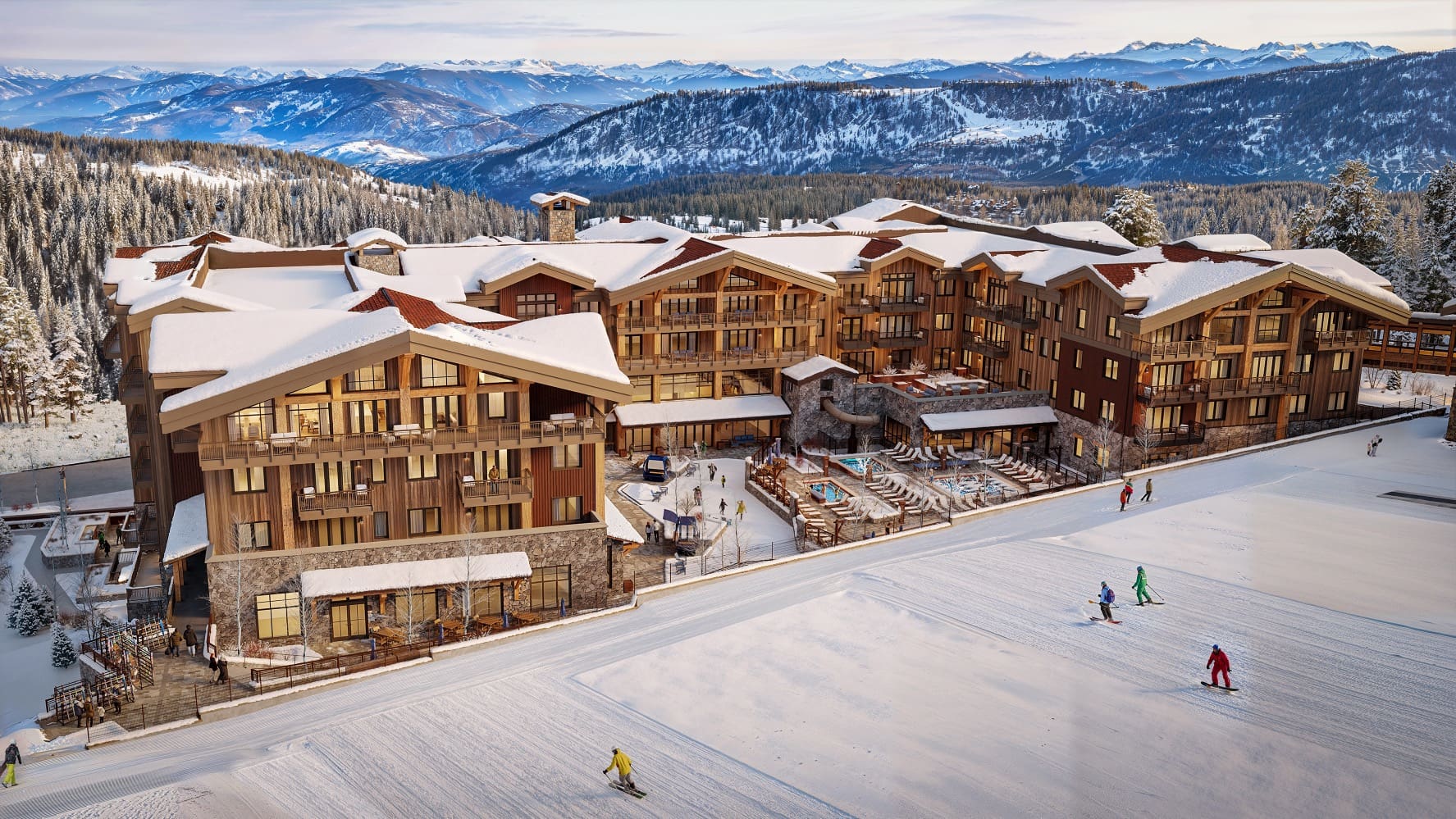
As an example, The Finale development incorporates workforce housing alongside a mix of residential and hospitality offerings, including the Imperial Hotel and Chalets at the base of Peak 8. Together, the hotel and chalets will offer more than 70,000 square feet of amenities, creating a destination designed to serve residents and visitors while contributing to the overall mountain experience.
What This Means for Developers
Future development across the Mountain West will increasingly depend on making the most of land that is appropriately located and capable of supporting new housing and complementary uses. That may mean master-planned communities, infill development, redevelopment or more intentional approaches to density. It also means looking beyond the individual building to the infrastructure, workforce and year-round amenities required to make a mountain community function.
Author bio: Graham Frank is a real estate development executive who has overseen several of the most successful resort developments in the Rocky Mountains. He serves as a managing member of The Finale Development Partnership alongside Mike Dudick, leading the development of Finale, a master-planned residential community in Breckenridge offering slopeside homesites, luxury ski-in/ski-out chalets, and downtown homes. Graham previously served as vice president of real estate at Vail Resorts, overseeing real estate development, project management, sales programs, and commercial leasing. His development experience includes notable mountain resort properties such as the Ritz-Carlton Residences in Vail, One Ski Hill Place in Breckenridge, the Arrabelle at Vail Square, Frontgate | Avon, and SKJÓL. He holds a bachelor’s degree in finance and an MBA from the University of Colorado Boulder’s Leeds School of Business.