

Denver’s commercial real estate lending environment continues to evolve amid elevated interest rates, shifting economic conditions and uncertainty across the market. While many larger financial institutions have become more cautious, particularly with smaller-balance commercial real estate transactions, community and regional banks are stepping in to fill the gap.
With a focus on transactions under $10 million, these lenders are leveraging local market knowledge, relationship-based banking and flexible financing solutions to serve investors and developers navigating a changing capital landscape.
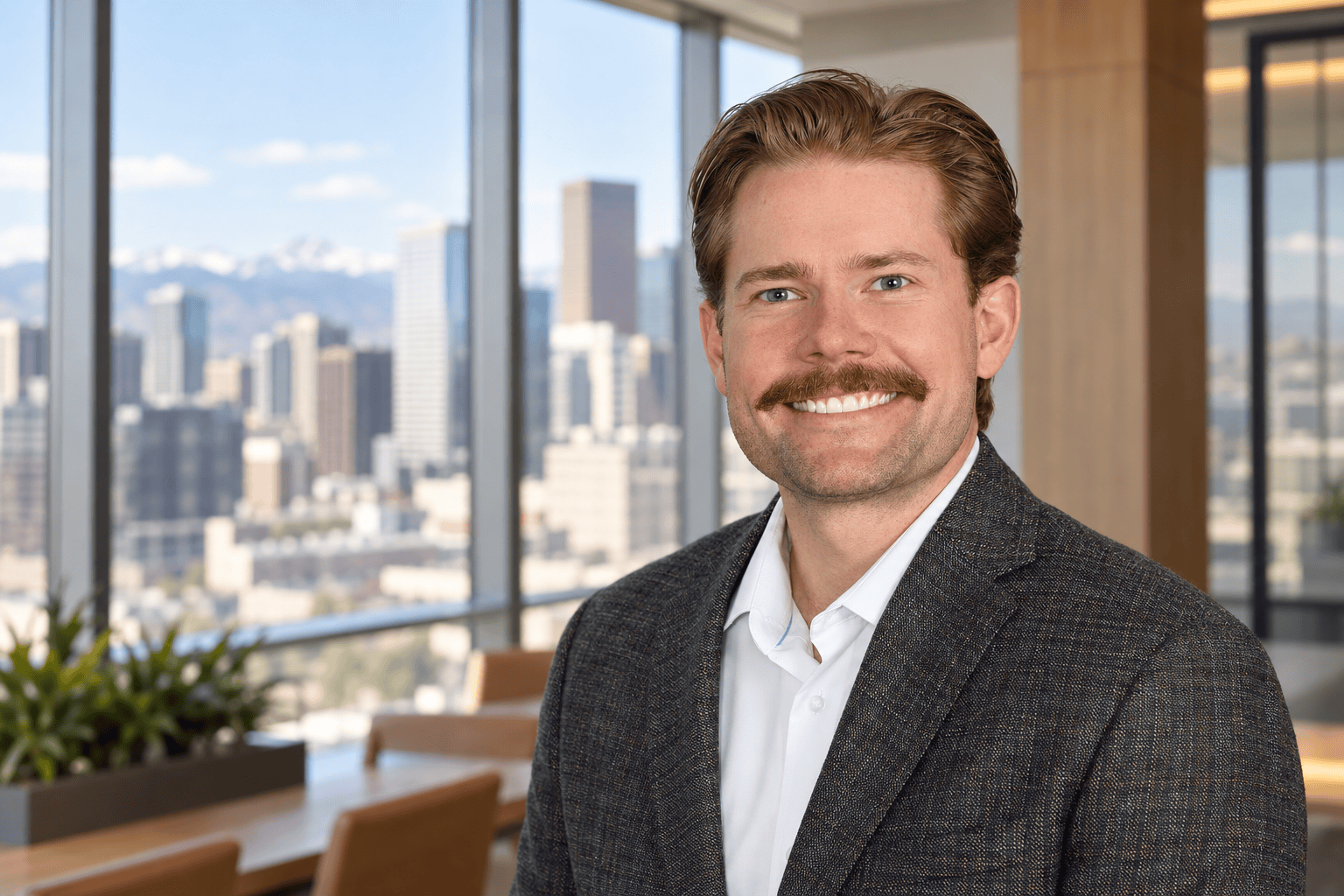
Zac Clark, commercial market president of CRE/specialty banking in Colorado at First Interstate Bank, leads the bank’s commercial real estate and specialty banking efforts, emphasizing team-based growth and client service. In this Q&A, Clark discusses current lending conditions, the sectors attracting capital, refinancing challenges, and what Denver-area investors and developers should expect heading into 2027.
1. How would you characterize the current CRE lending environment in Denver, and what has changed most significantly over the past year?
The Denver CRE lending environment remains challenging, but it is healthier than many headlines would suggest. The market continues to navigate interest rate volatility, a pullback from institutional capital, and increasing investor caution in certain areas of Denver due to regulatory concerns and uncertainty around future growth.
At the same time, bank consolidation has become one of the most significant factors shaping the lending landscape. Mergers and acquisitions continue to create disruption for borrowers as credit cultures shift, lending appetites evolve, and longtime banking relationships change.
Despite these headwinds, lending appetite remains strong for quality opportunities. Many banks are actively pursuing market share, while others are focused on retaining clients through merger activity. For borrowers with strong sponsorship, sound real estate fundamentals, and a clear business plan, capital remains available.
2. Are you seeing Denver CRE transaction volume increase or decrease? Which types of deals are still getting done?
Transaction activity has remained relatively steady across most asset classes, although we have seen capital shift between sectors as market conditions evolve. Within our own portfolio, activity has been balanced across multifamily, retail, industrial, and office properties.
Higher interest rates have affected transaction timing more than overall demand. Most real estate transactions are driven by a specific business need, whether a purchase, refinance, recapitalization, or ownership transition. Those needs have not disappeared. What has changed is that deals often require additional negotiation, restructuring, or creativity to make the economics work, which can extend timelines.
Retail has remained particularly active given strong occupancy levels, limited new supply, and attractive market fundamentals. Office transactions, while facing well-documented challenges, continue to attract opportunistic investors seeking value. Multifamily activity has slowed from peak levels, but quality assets in desirable locations continue to command strong demand when appropriately priced.
3. How are downtown Denver’s office vacancy challenges influencing lending decisions, and are lenders taking a different approach to financing office properties?
Many lenders have significantly reduced or eliminated their appetite for office lending, particularly due to concerns surrounding downtown Denver vacancy rates and the negative headlines that have accompanied the sector. For large regional and national institutions, broad market perceptions often influence credit decisions, making office lending more difficult regardless of individual asset performance.
However, lenders with local market expertise continue to identify opportunities within the office sector. It’s important to recognize that downtown Denver does not represent the entire office market. Several suburban submarkets continue to demonstrate healthy leasing activity and strong occupancy levels.
Our team has primarily focused on suburban office opportunities with diversified tenant bases and limited exposure to large single-tenant risk. We favor properties with demonstrated occupancy stability and experienced local ownership groups that have successfully operated through multiple market cycles.
4. Are larger banks pulling back from smaller Denver-area CRE transactions? What is driving that shift?
Yes, many larger banks have reduced their focus on smaller-balance CRE transactions, although some remain active as they work to retain clients acquired through recent mergers and acquisitions.
Part of this trend is simply economic. A $5 million loan often requires nearly the same level of underwriting, servicing, compliance, and monitoring as a significantly larger transaction. As banks grow in size, many choose to focus their resources on larger relationships where they can deploy more capital with less operational complexity.
Recent industry data supports this trend. The Federal Reserve’s October 2026 Senior Loan Officer Opinion Survey (SLOOS) showed banks tightening credit standards across all major commercial real estate categories while simultaneously reporting weaker loan demand. The survey highlighted a more cautious lending environment and reinforces what many borrowers are experiencing firsthand.
We have also seen several regional competitors reach a size where focusing primarily on larger middle-market relationships simply makes more economic sense. This is where relationship-focused regional banks continue to play a critical role. Borrowers often need a lender that understands not just the property, but the broader business plan and local market dynamics.
5. Which Denver property sectors are currently attracting the most lending interest, and where are lenders exercising the greatest caution?
Retail and medical office continue to attract significant lender interest. Both sectors have generally exhibited strong occupancy, limited new supply, and favorable supply-demand dynamics. In many cases, replacement costs remain well above existing asset values, creating an attractive environment for owners of quality assets.
Industrial and multifamily properties also continue to receive strong interest when occupancy and location fundamentals are compelling. While multifamily has experienced some pressure from new supply, well-located assets remain highly financeable.
Conversely, office and hospitality remain the sectors where lenders are exercising the greatest caution. Many financial institutions have substantially reduced their exposure to these asset classes, resulting in a smaller pool of lenders and more conservative underwriting standards.
For lenders willing to remain active in these sectors, borrower quality, local operating experience, and business plan execution have never been more important.
6. How are refinancing challenges affecting Denver property owners, and what options are available to borrowers facing higher borrowing costs?
Refinancing challenges remain very real across the market. Many loans originated between 2018 and 2022 carry interest rates well below today’s borrowing costs and are now approaching maturity or repricing events.
The impact varies significantly depending on leverage levels, cash flow performance, and asset quality. In some cases, borrowers can absorb higher debt costs with minimal disruption. In others, refinancing may require additional equity contributions, capital raises, restructurings, or asset sales.
Over the last several years, many owners have benefited from extensions and other temporary solutions. However, those options are becoming increasingly limited. As a result, many borrowers are being forced to address underlying capital structure issues directly.
For strong sponsorship groups and quality assets, there are still solutions available. Our team spends significant time helping borrowers navigate these transitions through creative structuring, thoughtful underwriting, and open dialogue around business plans. The best lenders today are not simply quoting rates; they are helping clients solve complex capital challenges. As more loans reset from the low-rate environment of 2018 through 2022, that advisory role will only become more important.
7. Are you seeing opportunities in Denver for adaptive reuse, office conversions, or repositioning of existing properties? How receptive are lenders to these types of projects?
Adaptive reuse and office conversion projects continue to generate significant interest, but economic feasibility remains the primary challenge.
Construction costs, financing costs, and equity requirements have all increased substantially, making many potential conversion projects difficult to justify financially. As a result, fewer projects are moving forward today than many anticipated several years ago.
From a lending perspective, these are often highly specialized and execution-intensive projects. Success typically depends on an experienced development team, capable contractors, a strong design strategy, and a clearly defined market opportunity. Given the complexity and risk involved, many lenders remain cautious.
That said, declining office valuations have improved acquisition economics in some cases, creating opportunities that were previously difficult to justify. Going forward, successful adaptive reuse projects will continue to be highly dependent on location, basis, sponsorship quality, and execution capability.
8. Which Denver submarkets or property sectors do you believe offer the strongest investment opportunities heading into 2027?
The answer largely depends on an investor’s risk tolerance and investment objectives.
From an opportunistic perspective, some of the most compelling opportunities may be found in distressed office and multifamily assets trading at significant discounts to replacement cost. We expect continued stress within portions of the market, which may create attractive entry points for investors with available capital and a long-term investment horizon.
Cherry Creek continues to be one of Denver’s most resilient and desirable submarkets, but opportunities exist throughout the metro area. We are also seeing increasing investor interest in communities outside of Denver’s urban core, particularly in jurisdictions perceived as more business-friendly and supportive of growth.
The reality is that deals are still getting done across the market. While investors are being more selective and underwriting is more disciplined than it was a few years ago, lenders continue to compete aggressively for well-positioned opportunities with strong sponsorship.
9. What is your outlook for Denver’s CRE lending environment in 2027, and what should local investors and developers be doing now to prepare?
I remain optimistic about Denver’s long-term commercial real estate outlook. Real estate has always been a cyclical business, and while there are certainly challenges ahead, periods of disruption often create some of the best investment opportunities.
The market will continue to work through elevated interest rates, refinancing pressure, and shifting capital flows. However, those same dynamics are creating opportunities to acquire quality assets at basis levels that were difficult to achieve just a few years ago. Investors who remain disciplined and well-capitalized will be in a strong position to capitalize on those opportunities.
From a preparation standpoint, maintaining access to both debt and equity capital remains critical. Investors who have liquidity available and can move quickly will be best positioned when opportunities arise.
Equally important is the strength of your banking relationships. Investors should evaluate those relationships before they need them. How does your bank respond when challenges arise? Is there local decision-making? Can they provide creative solutions? Do they move quickly? Are they committed to the market through both favorable and unfavorable cycles?
Contact Zac Clark at zac.clark@fib.com