

Each year, the U.S. Green Building Council (USGBC) releases its annual Top 10 States for LEED list, ranking the states with the most LEED-certified commercial space per capita. The list offers a look into what parts of the country are leading the way in sustainable development. Whether driven by policy or market demand, these communities are benefiting from built environments that prioritize human and environmental well-being, reduce emissions, and increase resiliency.
Colorado jumped six spaces this year to land third on the list. Office remains the space type with the most certifications in the market, both in number and by square foot. New construction projects make up a majority of LEED certifications in the state, but the certification of existing buildings through LEED for Operations and Maintenance (O+M) is also worth mentioning as a significant contributor to the overall square footage certified. Other sectors with historically large footprints in the market include higher education, warehouse and distribution centers, and multi-family residential projects.
Some projects to note in Colorado from this past year include:
1900 Lawrence
A LEED Platinum 1.1 million square foot, 31-story, office and mixed-use project in downtown Denver. The all-electric-ready building boasts impressive energy and water reduction goals and prioritizes enhanced indoor environmental quality for occupants.
Energy efficient features include building-level energy metering, demand response capabilities, and a central condenser water system that feeds water source heat pumps (WSHP) and water source variable refrigerant flow (VRF) units throughout the building to provide more efficient heating and cooling.
Other benefits to tenants include natural daylighting coupled with enhanced lighting strategies, water quality testing, sustainable materials selection, continuous indoor air quality monitoring, and fresh air rates that exceed code requirements. Green roofs and outdoor terraces are lined with native and adaptive vegetation to reduce heat island effects in the urban core, enhance biodiversity, and reduce irrigation demand.
This urban infill project supports the revitalization of downtown Denver, inviting companies and employees to benefit from sustainable, high-performance, and amenity-rich spaces accessible by public transportation.
The Denver Convention Center Expansion
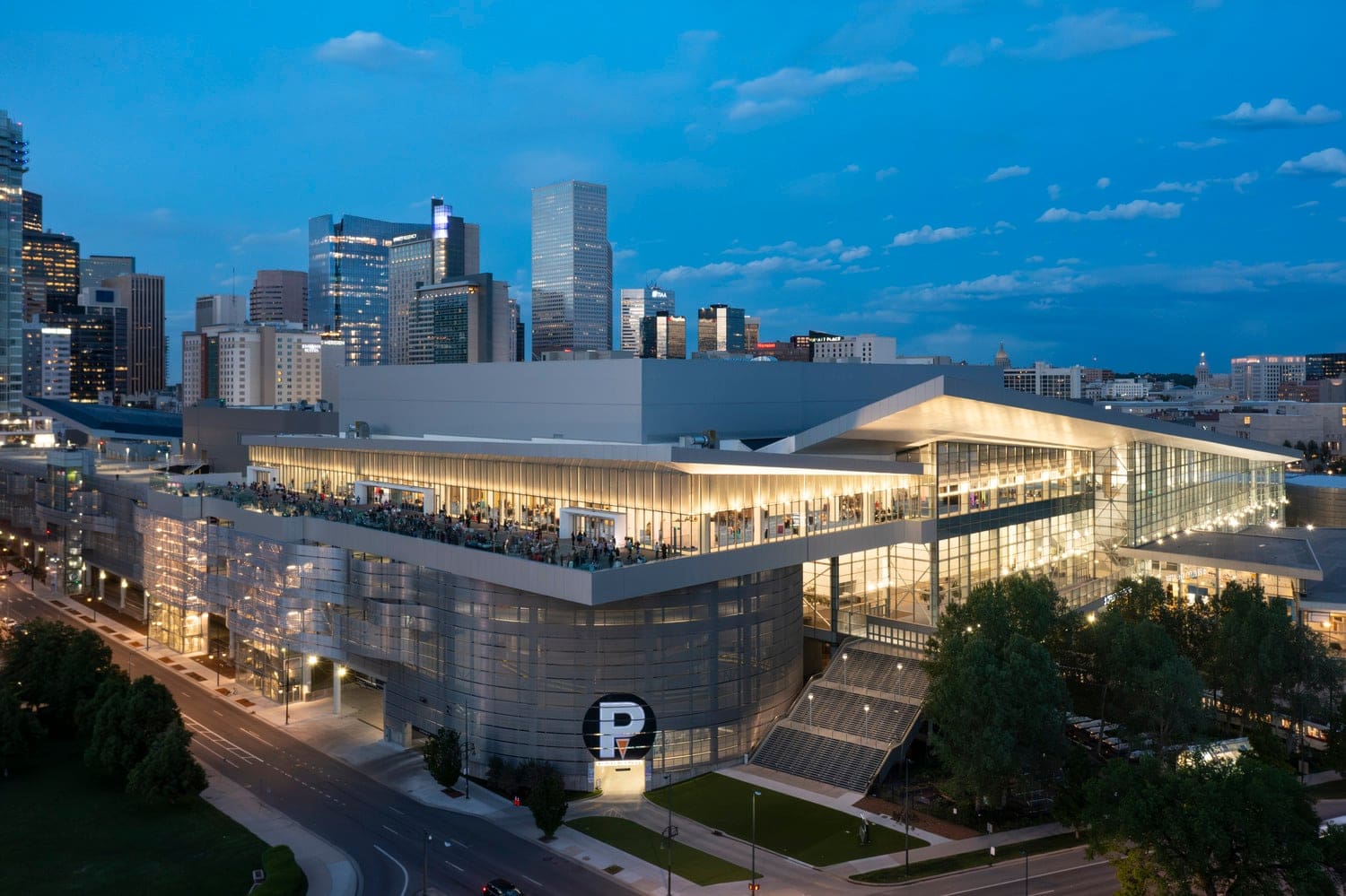
The Denver Convention Center expansion is another project uplifting the downtown urban core through sustainable civic development to promote economic vitality, market competitiveness, and community benefit.
Over the years, the convention center has led by example, certifying its existing 2 million-square-foot facility through LEED for Operations and Maintenance (O+M) to assess and monitor the building’s resource use and indoor environmental quality for occupants. When it came time to expand the space to meet market demand, the city chose to build up, not out, maximizing land use in a dense urban environment and extending the life of an existing asset.
This 218,000-square-foot expansion achieved LEED for New Construction and Major Renovations at a Gold level through thoughtful design decisions optimizing the performance and reliability of the space. Energy reduction measures include a high-performance envelope, selective glass glazing, and reduced interior lighting power density, along with LED fixtures. Thermal comfort is optimized through sensors and monitoring equipment, allowing heating and cooling to be regulated with building automation systems.
Outdoor terraces, flexible meeting space, and panoramic views complement the operational efficiencies and occupant experience to remain a nationally competitive conference space appealing to visitors near and far. The attraction of this civic space has invited activity in the surrounding area, stimulating long-term economic benefits as a result.
University of Colorado Anschutz Campus – Campus Police, Security & Preparedness
Higher education has long been a leader in green building practices across Colorado, and the University of Colorado Anschutz Campus is one that stands out. This past year, the Campus Police, Security & Preparedness facility achieved LEED Gold and is pursuing LEED Zero certification, a complement to LEED certification that verifies the achievement of net zero goals in existing buildings. This is the first building on campus to pursue net-zero energy and demonstrates leadership in designing a high-performance, around-the-clock preparedness facility.
Design considerations making this possible include advanced energy modeling and cautious planning, high-performance insulation, demand-controlled ventilation, onsite solar established through a power purchase agreement, and a connection to the campus central utility plant and existing energy infrastructure to increase efficiency. Reuse of the existing structure also reduces the embodied carbon of the project.
Situated at the edge of campus, this facility connects the campus to the larger community, creating a more vibrant and connected feel. Users of the facility will benefit from low maintenance and increased comfort, while the community benefits from an increased sense of security and the commitment to environmental stewardship.
Using LEED as a framework for design offers teams and owners a roadmap of strategies to improve building efficiencies, reduce costs, support tenants, and consider impacts on surrounding communities. With the newest version of LEED, LEED v5, and an increased emphasis on decarbonization, quality of life, and ecological conservation and restoration, we’re excited to see the market continue to push the boundaries of design while showcasing what it means to build better. To see other LEED-certified projects in Colorado, you can go to the USGBC Colorado community page and select “projects”.