

By Katie Rapone,
For decades, Keystone has been a year-round mountain destination known for skiing, mountain biking, festivals and outdoor recreation. Yet despite its popularity, River Run Village lacked two defining elements found at many premier ski resorts: a luxury slopeside hotel and a central gathering place where visitors and locals could come together to enjoy the village beyond the slopes.
That changed this spring with the opening of Kindred Resort.
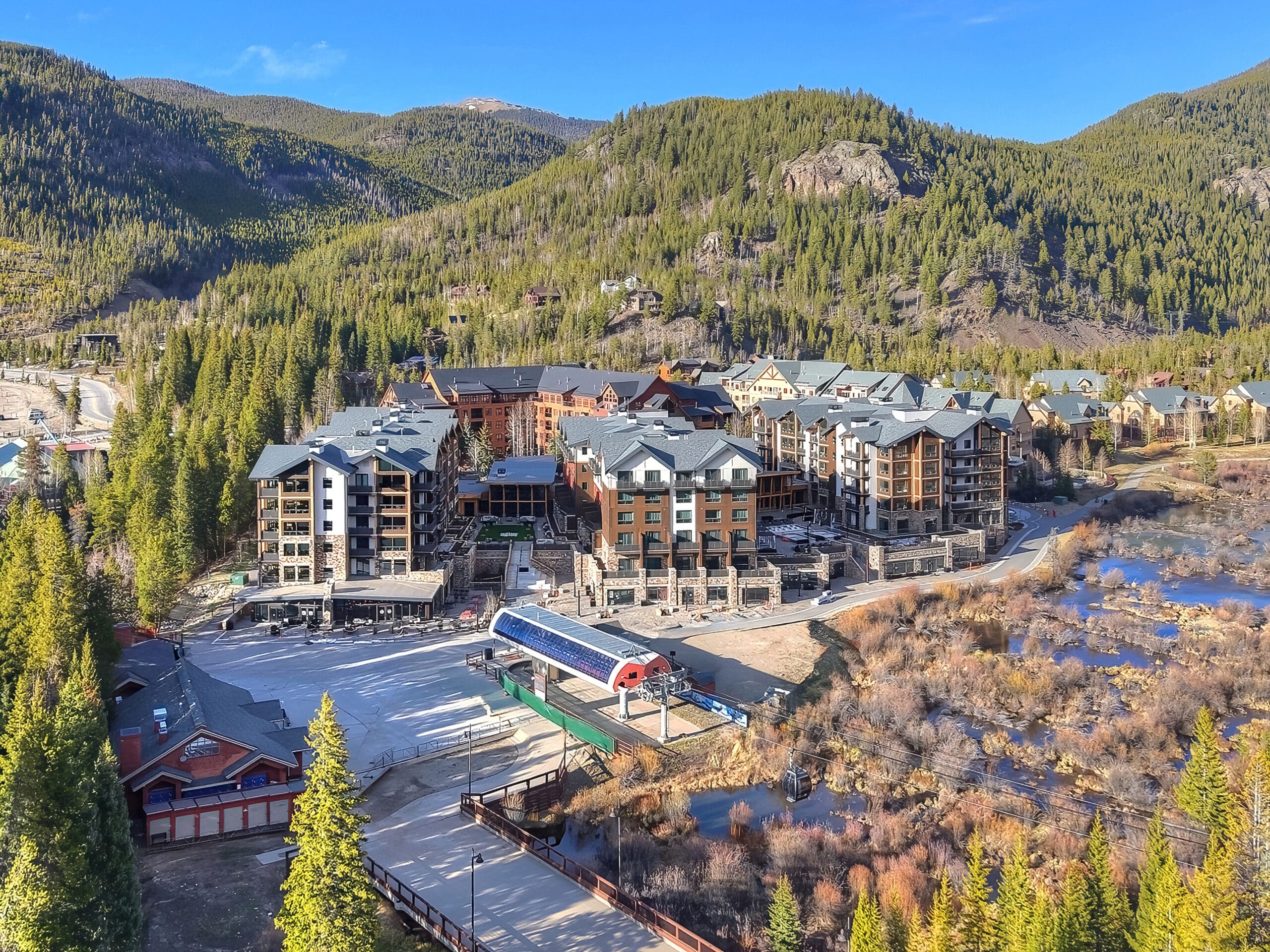
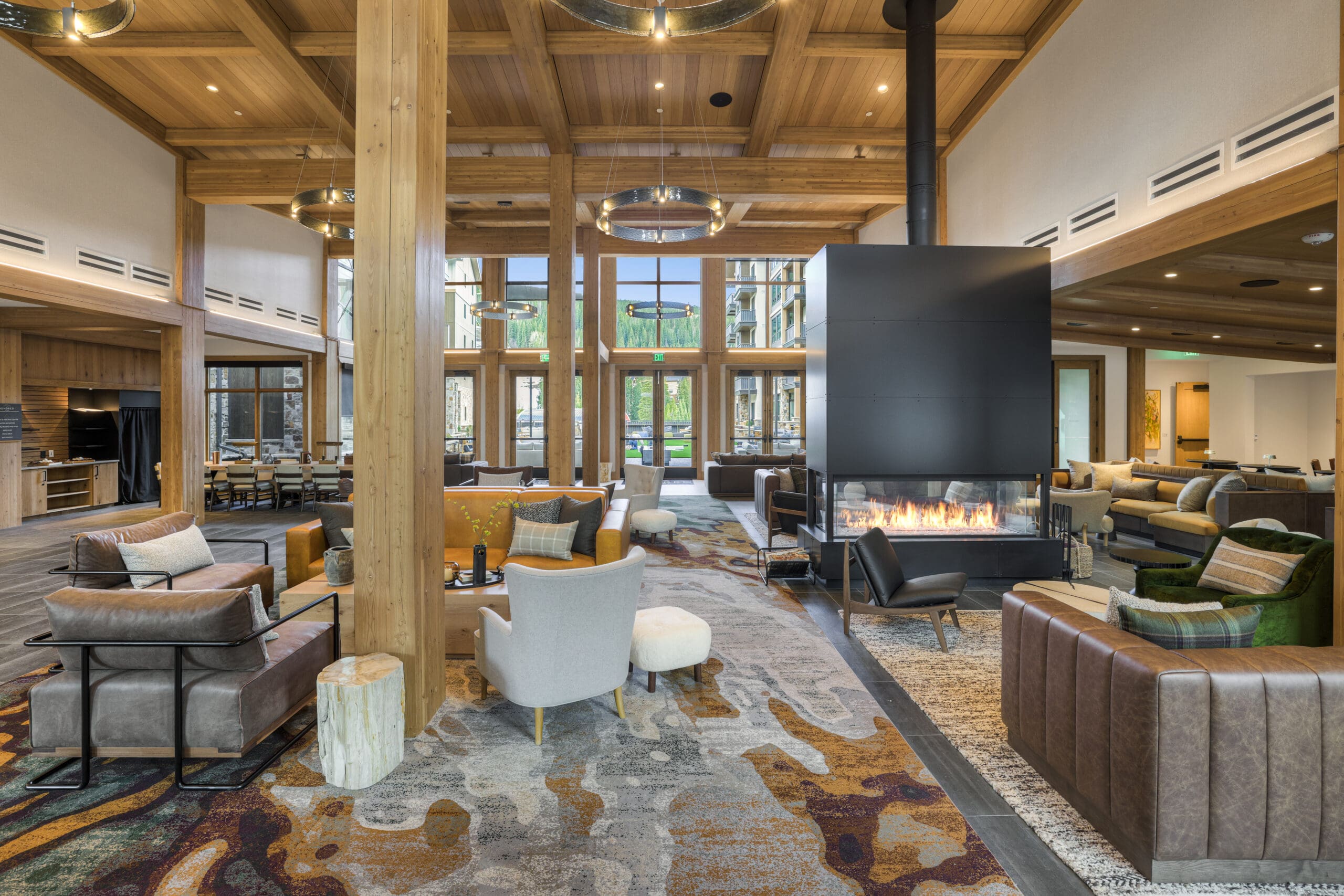
Located at the base of the River Run Gondola, Keystone’s first luxury ski-in/ski-out resort was envisioned as more than a hotel. From the earliest planning meetings, the development and design teams set out to create what they call “the living room of Keystone,” a welcoming destination that blurs the line between private resort and public space, inviting everyone to gather, connect, and experience the energy of River Run Village.
Kindred Resort was developed by ORRA Keystone Investments, LLC, a partnership of mountain town and international developers. PCL Construction was the project’s general contractor and OZ Architecture led the design, with Norris Design as the initial planner and landscape designer.
“Keystone does not have a base lodge at River Run Village,” says Rebecca Stone, principal at OZ Architecture. “There was nowhere for skiers or summer guests to gather unless they rode the gondola. A design idea very early in the process was to create a hotel that would be open, welcoming and inviting, not only for guests and residents, but for the public to enjoy.”
The 367,829-square-foot mixed-use development, inspired by Colorado’s outdoor beauty, spans 4.2 acres and includes a 107-key RockResorts hotel, 95 luxury residences, a private members club, more than 10,000 square feet of meeting and event space, wellness amenities, restaurants, retail and skier services. Together, the project introduces a new level of luxury hospitality to Keystone while creating a vibrant year-round destination designed for the entire community.
A Resort Designed for Everyone
Unlike many luxury mountain resorts, Kindred wasn’t designed to feel exclusive. Instead, the architecture intentionally welcomes people inside, whether they’re checking into the hotel, heading to dinner, meeting friends after skiing, or simply exploring River Run Village.
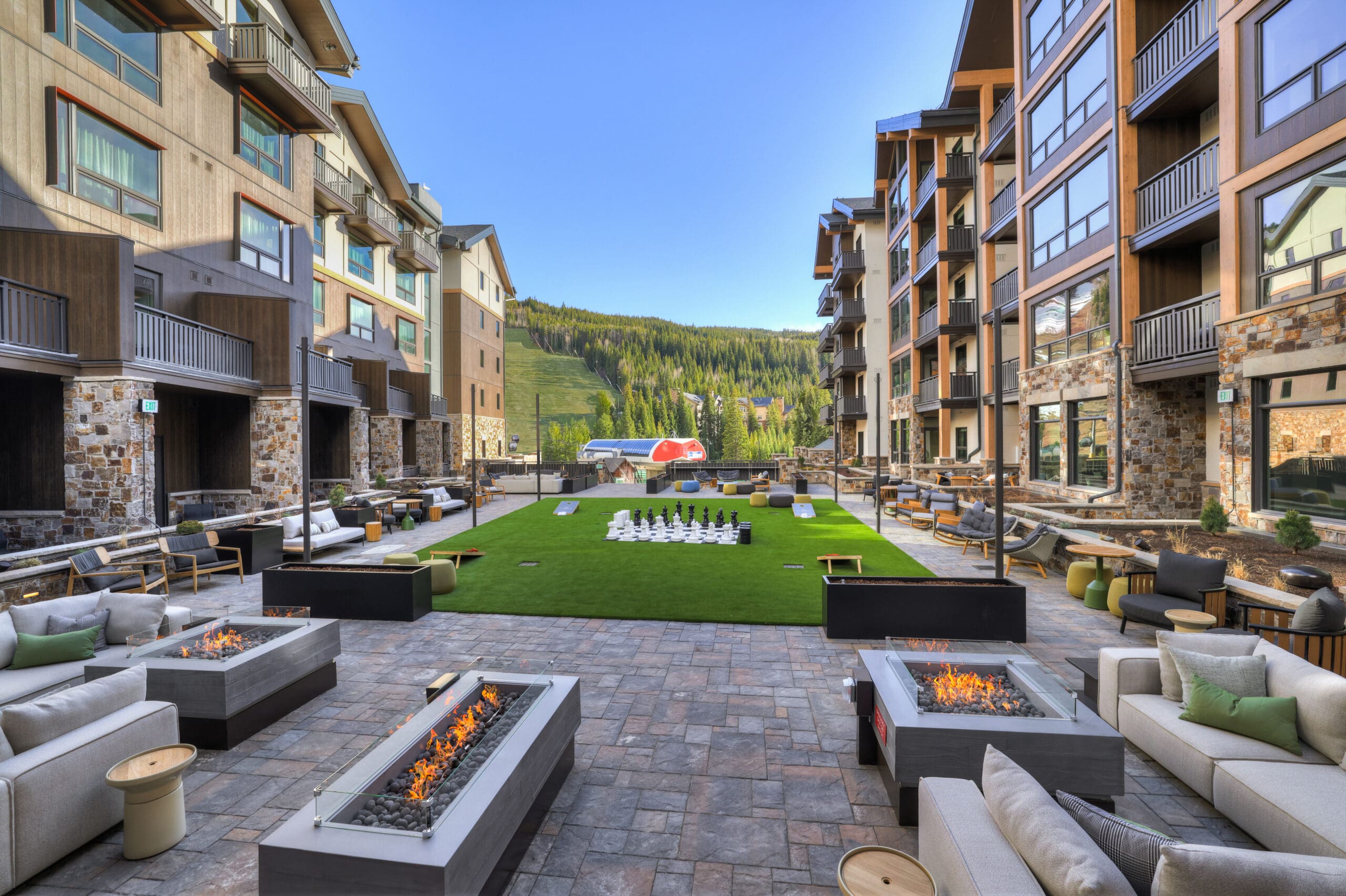
That philosophy shaped nearly every aspect of the project. A public staircase connects the gondola plaza to a Kindred’s large courtyard that leads inside to the hotel lobby, creating a natural extension of the pedestrian experience rather than a formal hotel entrance. Expansive windows, inviting seating areas and indoor-outdoor gathering spaces dissolve the boundary between the resort and River Run Village, encouraging visitors to step inside even if they aren’t staying overnight.
The result is a lobby that functions less as a traditional hotel check-in area and more as Keystone’s communal living room — a place where families reconnect after a day on the slopes, homeowners gather with neighbors and visitors relax beside the fireplace before heading out for dinner or evening events.
That welcoming atmosphere is reflected throughout Kindred’s hospitality philosophy, which the development team calls “Campfire Luxury.”
Rather than defining luxury through exclusivity, the concept emphasizes connection, authenticity and shared experiences inspired by Colorado’s mountain culture.
“Colorado is our home, and we had a special opportunity to create a legacy project and give back to our community,” says Ryan Geller, partner with the Kindred development team. “The idea was to create a place for the community, owners, and members to gather — to bring kindred spirits together. That was our original vision and why we named (the resort) Kindred.”
Outdoor fire pits host gourmet s’mores gatherings, while courtyard lawn games, guided meditation, silent morning nature walks and seasonal programming encourage guests to experience Keystone beyond skiing.
Inside, the resort’s lobby bar, Kindred Spirits. serves as the social heart of the property, welcoming hotel guests, residents and locals alike for après-ski cocktails, casual conversations and evenings around the fireplace.
Destination Dining
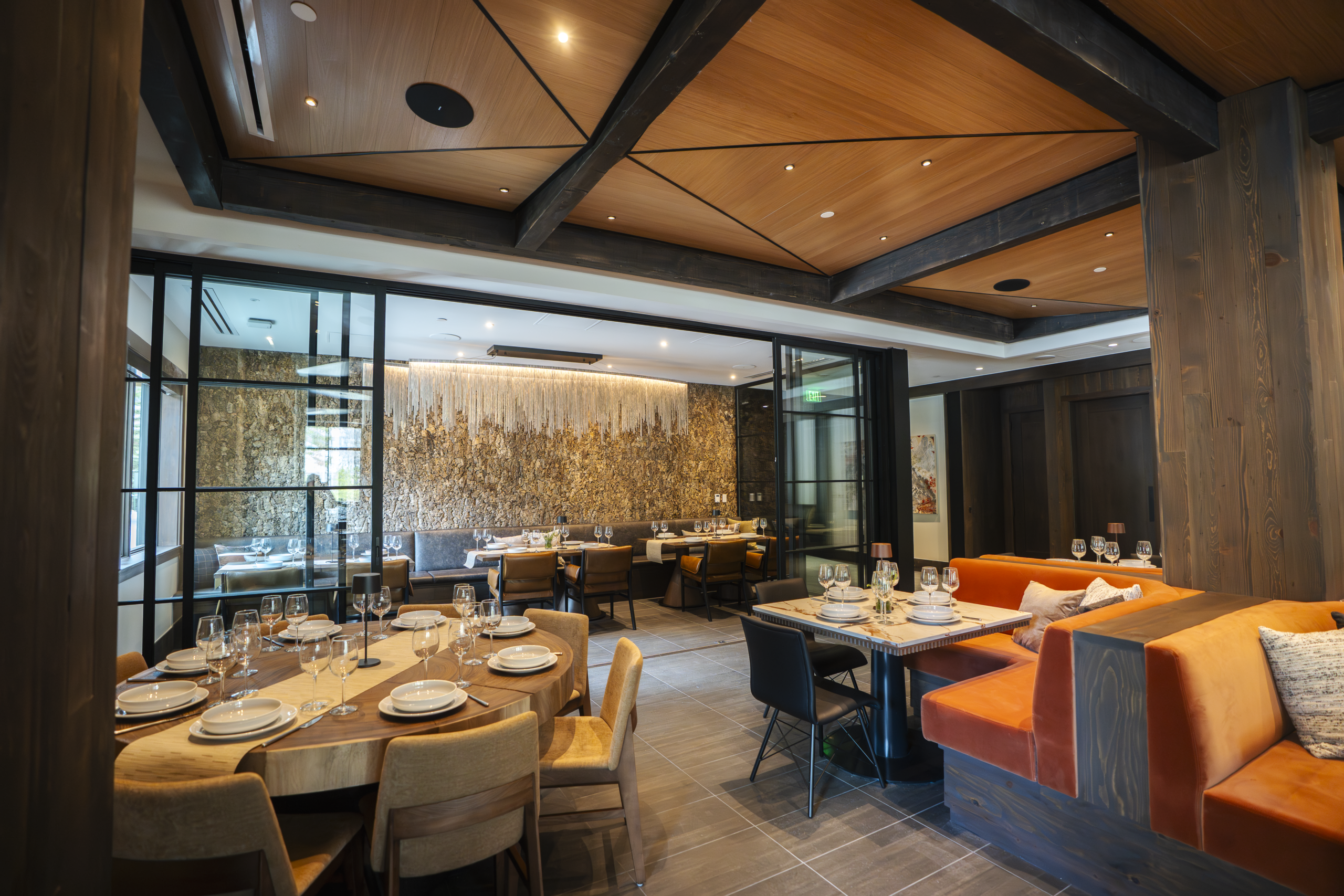
Dining has become an essential ingredient in today’s luxury resort experience. Kindred’s dining program was designed to activate River Run Village beyond the ski day, giving both visitors and locals reasons to return throughout the day and into the evening.
“The food offerings in resorts are improving, and the client is demanding great dining and service. Often, even a well-known chef. Guests are looking for authentic places to eat that become part of the community, not simply hotel restaurants,” Stone says.
Kindred’s signature restaurant, Lula’s Restaurant — named after Lula Meyers, the local schoolteacher who is the namesake for the ski trail called Schoolmarm at Keystone — celebrates seasonal ingredients, genuine hospitality, and thoughtfully crafted elevated comfort food inspired by the spirit of the mountains.
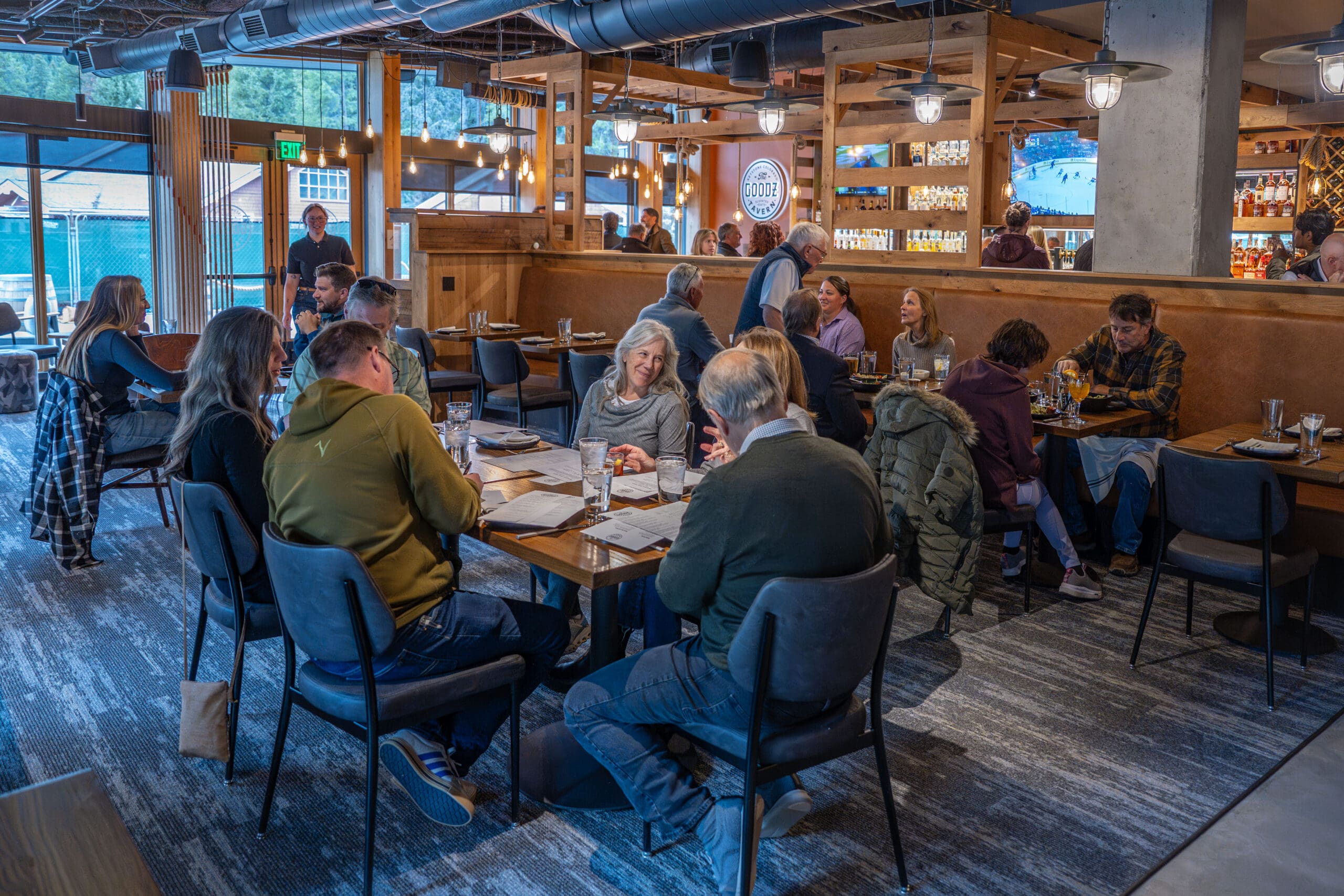
Adjacent to the gondola, two independently operated concepts expand River Run Village’s dining options: Goodz Tavern, an alpine-inspired tavern where comfort food meets mountain elegance, and Kinji Sushi, the only sushi restaurant in Keystone, which also serves a variety of Asian fusion dishes.
Architecture Inspired by the Mountain
Inspired by the movement of the nearby Snake River, OZ Architecture organized the development around a series of outdoor “eddies” — spaces where activity naturally slows, encouraging visitors to pause, socialize and enjoy the surrounding landscape. Landscaped courtyards, fire pits, seating areas and pedestrian pathways create a sequence of welcoming public spaces that seamlessly connect River Run Village with the hotel.
Kindred consists of three buildings arranged perpendicular to the mountain, maximizing views while maintaining strong connections between the resort and the village. OZ Architecture used traditional mountain materials in a modern application, incorporating a slightly more refined cut to the stone at the base, pops of orange at the window trim of the hotel, and a creamy stucco application at the top of the building that allows the heavy timber elements to be highlighted.
“Mass timber elements were used structurally in the public spaces — the lobby and the event space — bringing warmth to those areas and setting them apart from the rest of the architecture,” says Stone.
Building a Mountain Landmark
Creating a place that feels effortless for visitors required overcoming a series of complex design and construction challenges. The project entered permitting just as the COVID-19 pandemic began, forcing the team to navigate years of supply chain disruptions and material delays during construction.
“Mountain weather and staffing challenges of being in a small resort community required an extra level of planning and sequencing, such as coordinating hundreds of trades in an in-fill site at the base of the mountain. Logistics were equally challenging, from material deliveries and crane operations to workforce coordination in a resort community with limited housing and infrastructure,” says Ryan Geller, partner for the Kindred development team.
The site’s steep topography and its immediate proximity to the River Run Gondola were also challenges. Rather than simply fitting a hotel onto the property, the design team carefully integrated the public plaza, grand staircase, hotel entrance and supporting infrastructure to create a seamless pedestrian experience while maintaining direct access to the slopes.
Environmental stewardship added another layer of complexity. The site borders a Snake River tributary and protected wetlands, requiring the team to preserve sensitive natural features while maintaining public access. OZ Architecture responded by incorporating a creekside pathway that allows visitors to experience the landscape without disturbing it, balancing conservation with community connectivity.
Local planning regulations further influenced the final design. Keystone’s Planned Unit Development guidelines and building height restrictions shaped the resort’s distinctive rooflines, which were carefully engineered to maximize interior space and mountain views while remaining within the community’s height limits.
For the design team, every obstacle ultimately reinforced the project’s original vision. Every design decision was measured against one objective: creating a resort that feels like it has always belonged in Keystone.
Elevating the Keystone Experience
Kindred also introduces amenities previously unavailable in Keystone. Guests can enjoy a year-round heated outdoor pool, oversized hot tubs overlooking the mountains, a spa and wellness boutique, fitness center, children’s programming, ski school, and more than 200 works by Mountain West artists displayed throughout the property. The resort also offers more than 10,000 square feet of meeting and event space, highlighted by a ballroom framed by panoramic views of Dercum Mountain.
“The experiences are what people will remember,” says Dan Dohner, general manager for Kindred. “We have more than a dozen fire pits, that naturally gather people together. The conversations that happen between families, the stories about Keystone’s history, s’mores with your kids—these are the moments people will remember and talk about when they get home.”
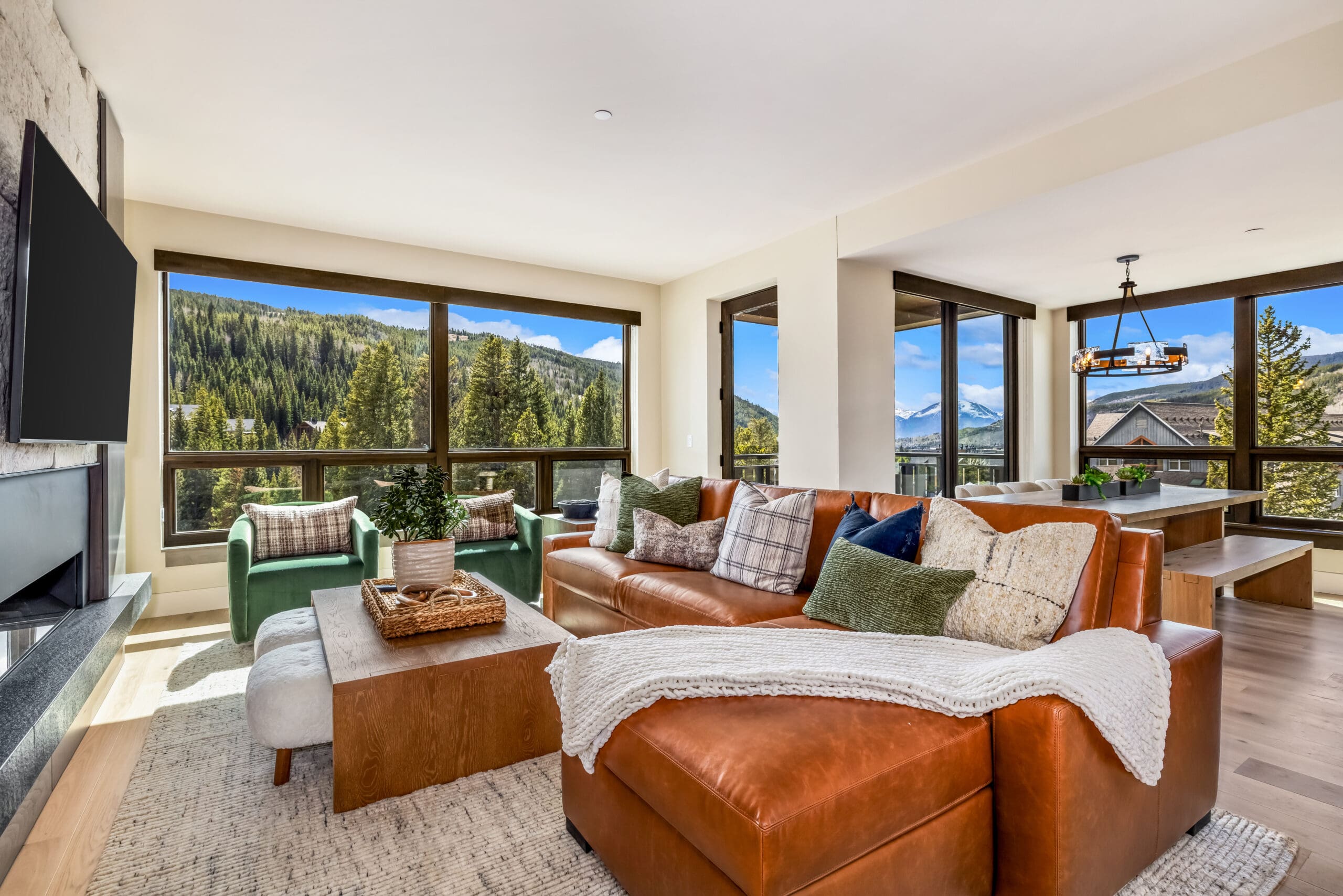
The adjacent residential component has also been well received. Two towers feature 95 luxury residences ranging from one to four bedrooms, but only seven of
the 95 total residences remain available for purchase. LIV SIR global real estate advisors Hank Wiethake and Doyle Richmond have sold 93% of the residences, and
there are still opportunities for buyers with prices ranging from $2,575,000 to $5,350,000.
OZ Architecture believes Kindred reflects a broader evolution in mountain hospitality. Over the past decade, luxury brands have increasingly entered resort markets, elevating guest experiences through wellness programming, destination dining and thoughtfully designed public spaces. Yet the most successful projects, she says, are those that remain rooted in their surroundings rather than feeling interchangeable from one destination to the next.
“The brands that allow the most freedom of expression — where the design is truly ‘of the place’ — are the most successful in resort communities because they connect guests with the local experience,” Stone says.
While Kindred introduces Keystone’s first luxury ski-in/ski-out accommodations, its lasting impact may be how it reshapes the experience of River Run Village. More than a hotel or residential development, Kindred has redefined how visitors experience River Run Village, creating an active public gathering place that extends well beyond the ski day.
“Kindred reinforced that exceptional mountain resorts are about much more than constructing beautiful buildings,” says Geller. “They’re about creating places that bring people together, spaces that naturally blend into the Rocky Mountains and enhance and energize their community.”