

Construction is advancing at Cleora, a 55-acre residential development in Salida, Colorado, expected to become one of the world’s largest planned 3D-printed residential communities and its own metro district. With infrastructure complete, seven homes already constructed, multiple homes sold and additional homes under construction, the project is moving from concept to reality as developers seek to establish a scalable model for future housing communities.
While many 3D-printed housing initiatives have focused on individual homes or small pilot projects, Cleora was designed to test the technology at community scale. Cleora will deliver a 172-door project across 106 thoughtfully planned homesites, featuring single-family homes, duplexes, accessory dwelling units, and mixed-use spaces that seamlessly blend living, entrepreneurship, and community.
Developed by Cleora in partnership with True North, its dedicated 3D-printing general contractor, the project is intended to serve as a blueprint for how advanced construction technologies can support future residential development while addressing industry challenges related to labor availability, construction efficiency and long-term scalability.
“From day one, our vision wasn’t simply to build 3D-printed homes; it was to prove that robotics could transform how entire communities are designed and delivered. Cleora is demonstrating that this technology is ready to move beyond prototypes and become a practical, scalable solution for real neighborhoods. RIC Robotics has been an outstanding technology partner in helping bring that vision to life,” said Greg Kenny, managing partner, Cleora
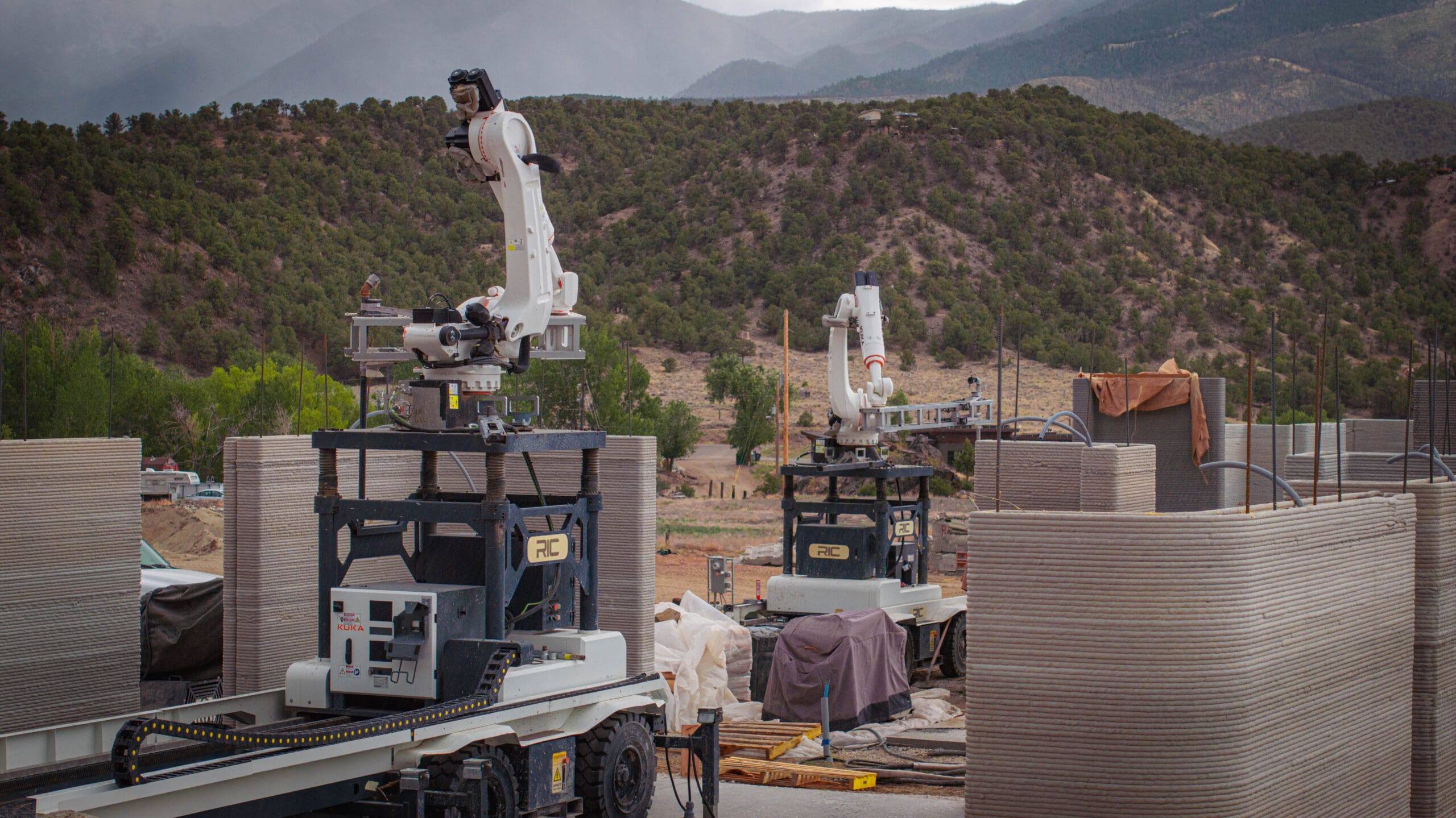
The development is the culmination of nearly seven years of research into construction technologies, development strategies and scalable housing solutions. After evaluating multiple construction technology providers, the project team selected RIC Robotics to support delivery of the community’s 3D-printed homes. More than 65 homes are expected to utilize RIC’s construction robotics and 3D-printing technology, making Cleora one of the largest planned deployments of robotic construction technology within a single residential development in the United States. Today, two autonomous RIC Robotics printing systems are operating in support of construction activities across the site.
“Much of the conversation around 3D-printed construction has centered on individual homes and demonstration projects,” said Dr. Ryan Cox, CEO of RIC Robotics. “Cleora represents a significant step forward because it demonstrates how robotics can be integrated into a real community at meaningful scale. The project is helping answer important questions about how technology can support the future of housing delivery, from construction efficiency and workforce development to long-term community growth.”
“As someone with an architectural background, I’ve always believed construction robotics should expand what’s possible in design, not limit it,” said Ziyou Xu, founder of RIC Robotics. “Cleora demonstrates that modern, architecturally distinctive homes can be delivered at scale without increasing costs for homeowners. That’s the promise of construction robotics, creating communities that are both beautiful and attainable while fundamentally changing how we build.”
As construction continues, developers are taking a measured approach to scaling production. True North’s first model home is currently under construction, with the shell expected to be completed this month.
Beyond construction, Cleora is also intended to serve as a workforce development hub for the next generation of construction professionals. Through a partnership with Colorado Mountain College, students will gain hands-on experience with robotics, 3D-printing construction technologies and digital design software, helping prepare workers for careers in an increasingly technology-driven construction industry. The collaboration is expected to support future training programs and certifications focused on emerging construction technologies while helping address ongoing labor shortages across the construction sector.
The development is also notable for establishing the county’s first 3D printed metro district, enabling the community to support critical infrastructure systems including commercial, recreational, utilities, water treatment and other essential services. Project leaders believe the integrated infrastructure model will provide valuable lessons for future large-scale developments.
With homes already delivered, additional construction underway and production expected to ramp steadily in the coming years, Cleora offers one of the clearest examples yet of how 3D-printing technology is moving beyond experimentation and into real-world community development, serving as a model for how construction robotics and other emerging technologies can be deployed at meaningful scale.