

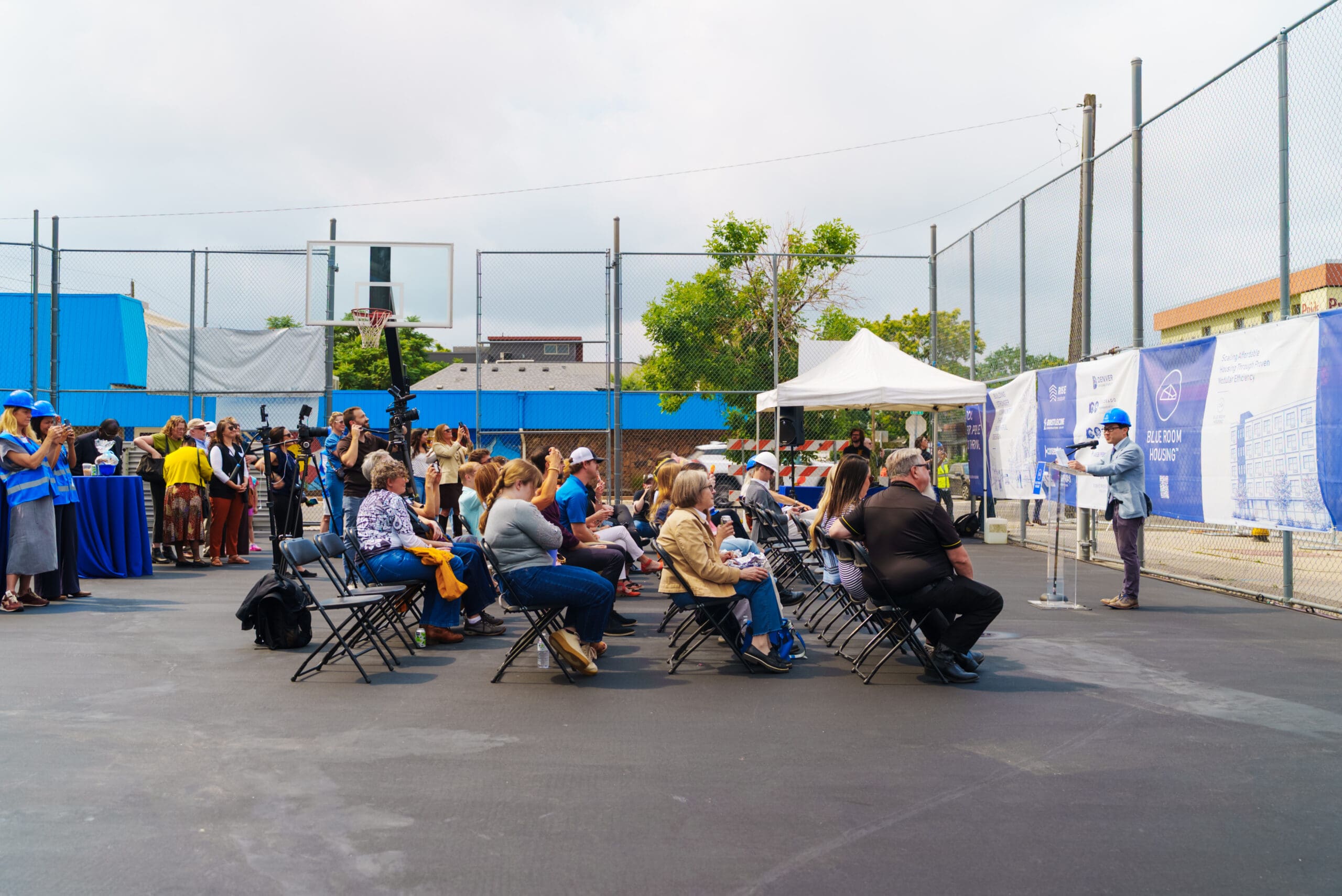
Blue Room Housing, a Denver-based impact-first developer creating affordable mixed-use communities through innovative modular construction, alongside RISE Modular, today reached a major construction milestone at Blue Room House One, its flagship residential modular development in Denver’s Santa Fe Arts District.
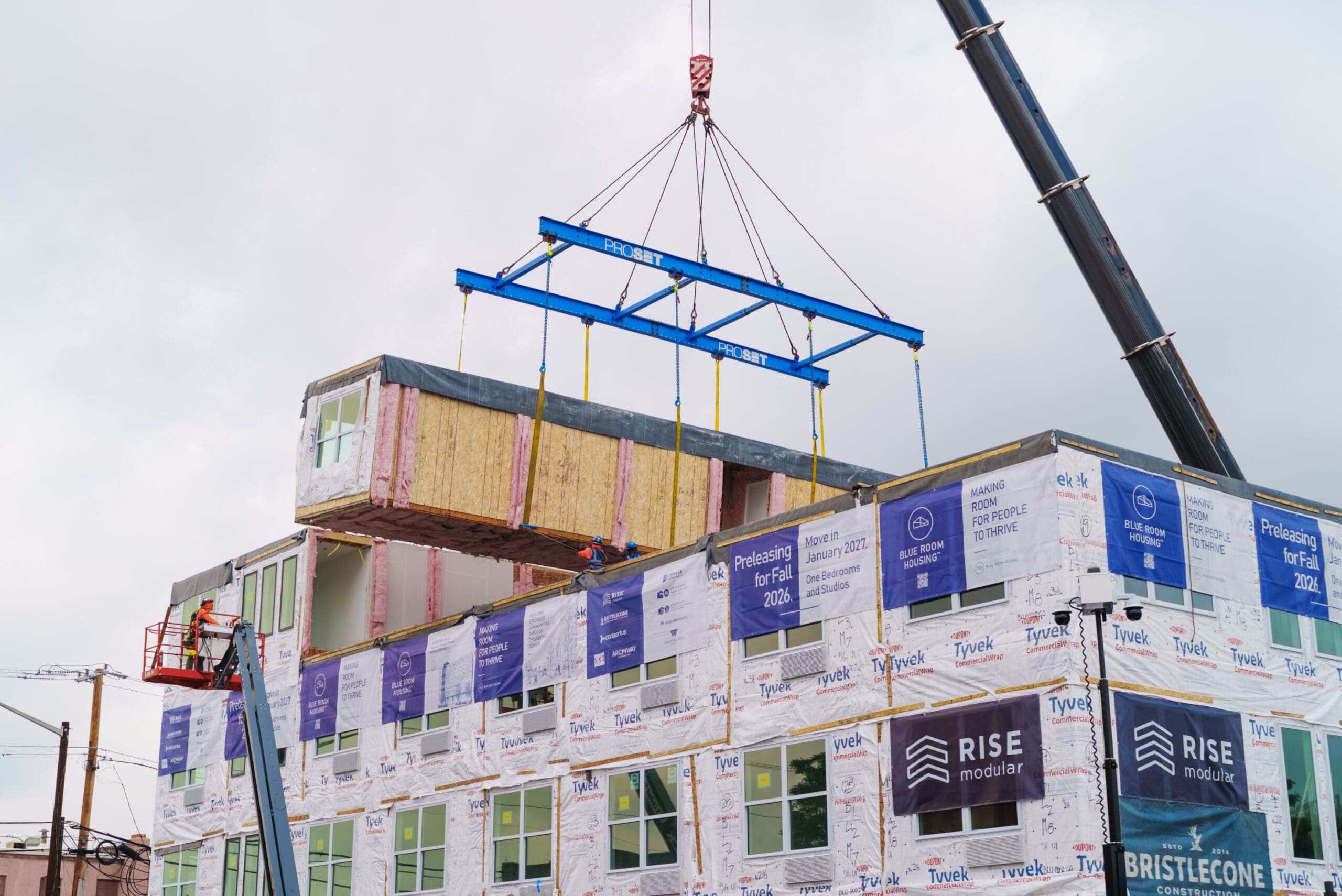
Located at 817 W. Eighth Ave., the project celebrated the “setting” of its modular housing units. This milestone refers to the time when modular units are lifted into place by crane and assembled on-site. Developed by Blue Room Housing and manufactured by RISE Modular, Blue Room House One is the first development from Blue Room Housing and provides a visible example of how modern construction methods can support more efficient approaches to delivering much-needed housing in our communities. The modular units were designed by Studio K2 Architecture.
Guided by its mission of “Making Room for People to Thrive” where people are getting pushed out of their communities, Blue Room Housing is committed to expanding access to attainable housing and addressing Colorado’s growing housing shortage. Through a combination of innovative financing, modern construction methods and community-centered development, the company seeks to create new pathways to affordability while strengthening the neighborhoods it serves.
“Blue Room House One is proof that we can think differently about how housing is delivered. This moment is about laying the foundation for a housing ecosystem that gets smarter, more efficient and more equitable with every project,” said Minyoung Sohn, founder of Blue Room Investing. “We believe everyone who works full-time should be able to afford a place to call home, and we’re committed to building models that make that possible. House One is our prototype, and we’re excited about what comes next for Denver and communities across Colorado.”
Denver continues to face significant housing affordability challenges with a housing deficit estimated between 64,000 and 135,000 units, while the hours of work required for the average homeowner to afford a mortgage have nearly doubled over the past decade. As housing costs continue to outpace incomes, many working residents are finding it increasingly difficult to live in the communities they help sustain.
As an impact-first developer, Blue Room Housing focuses on identifying innovative ways to reduce the cost of housing delivery while preserving quality construction and long-term affordability. The company views modular construction not as an end in itself, but as a tool to create greater efficiencies that can help expand housing opportunities for the residents who need them most.
By partnering with RISE Modular, Blue Room Housing shifts much of the construction process off-site to a controlled manufacturing facility, helping reduce build times by an estimated 30% to 40% while increasing efficiency, predictability and quality control. As modular housing systems mature and scale, they have the potential to reduce costs, accelerate delivery and support more sustainable construction through reduced waste and emissions.
“Blue Room approached this project with a clear focus on doing things differently, prioritizing affordability and long-term scalability from day one,” said Christian Lawrence, founder and CEO of RISE Modular. “By closely aligning the design with a volumetric modular strategy, we were able to unlock manufacturing efficiencies, maximize a tight urban site and create a more predictable delivery process. We’re proud that our first Denver project demonstrates how advanced manufacturing can help bring innovative, attainable housing to market.”
As Denver works to address the need for increased affordable housing, Blue Room House One offers a local example of how modern construction methods and coordinated project delivery may help expand housing opportunities. The development is designed to serve residents earning between 30% and 80% of Area Median Income (AMI), with a particular focus on supporting creatives and working residents in the Santa Fe Arts District.
“The Santa Fe Arts District is one of Denver’s most culturally significant neighborhoods, but rising housing costs have made it increasingly difficult for many artists, educators, service workers and longtime residents to remain in the community,” said Hilary Cooper, director of innovative funding for housing programs at the Office of Economic Development & International Trade (OEDIT). “Projects like Blue Room House One help address that challenge by creating attainable housing opportunities for the people who contribute to the neighborhood’s identity, preserving the culture that has made Santa Fe a cornerstone of Denver’s arts community.”
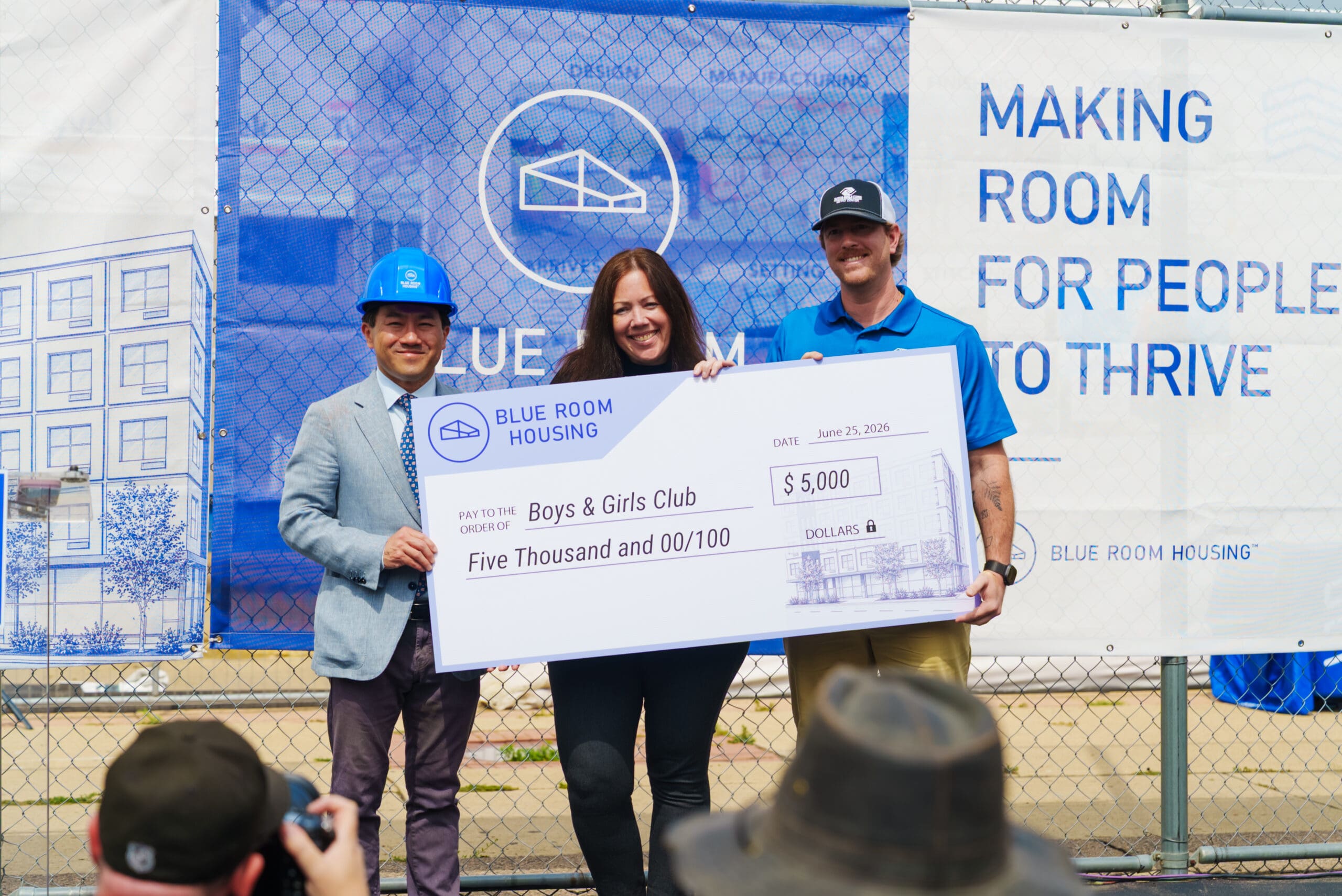
The celebration was hosted at the neighboring William E. Cope Boys & Girls Club. In appreciation for the organization’s hospitality and its longstanding service to local youth and families, Blue Room Housing presented the club with a monetary donation, underscoring the company’s belief that strong communities are built through both housing and investment in the organizations that support local residents.