

By Marianne Stuck and Chris Geddes, principals at Design Workshop


For generations, the Mountain West has grown outward rather than upward. Abundant land, vast landscapes, and an automobile-oriented development pattern have made low-density neighborhoods the norm, with highways serving as the primary connectors between homes, jobs, recreation, and services. But as record growth reaches many mountain communities, fuel costs rise, and residents increasingly demand the preservation of open space and natural areas, investment in rail transit is becoming more common throughout the region. While some systems have existed for decades and others remain in their infancy, one condition is remarkably consistent: many transit stations are located within or adjacent to historically suburban, low-density neighborhoods.
As housing shortages intensify, policymakers increasingly view transit stations as logical places to accommodate new homes and higher-density development. Cities across the region have adopted policies encouraging greater residential density, affordable housing, and mixed-income development within walking distance of transit. Yet, these efforts are often met with resistance from nearby residents who fear that large-scale apartment projects will overwhelm neighborhood character, increase traffic, and diminish quality of life. Between the urgent need for housing and the desire to preserve community identity lies an opportunity for a more balanced approach—applying missing-middle housing principles to transit-oriented development.
Too often, communities respond to station-area redevelopment by dramatically upzoning land surrounding transit stops to allow maximum heights and densities in hopes of accelerating investment and maximizing land value. In many cases, these zoning changes occur immediately adjacent to established single-family neighborhoods, creating abrupt transitions in scale and character. While large multifamily developments may lease successfully over time, they often appeal to a relatively narrow demographic—frequently younger renters drawn to transit access and urban amenities. The result is often a station area that adds units but falls short of creating the diverse, walkable, and socially connected community that supports residents across multiple life stages and income levels.
Successful transit-oriented neighborhoods require more than density alone—they require housing choice. While compact apartments may appeal to younger adults, families often seek homes with some degree of private outdoor space. In Mountain West communities, especially, outdoor recreation is deeply embedded in daily life, and residents frequently require space for recreational and sporting goods. Empty nesters may wish to downsize while still maintaining the stability of homeownership. At the same time, working-class households deserve access to attainable housing options connected to reliable transit and everyday services. The most successful station areas are not defined by maximum density, but by a mix of housing types that allow people at different stages of life to live, work, and remain in the community over time. Between the detached house and the mid-rise apartment lies a housing middle ground—one that may offer the Mountain West its best opportunity to align growth, mobility, and community character.
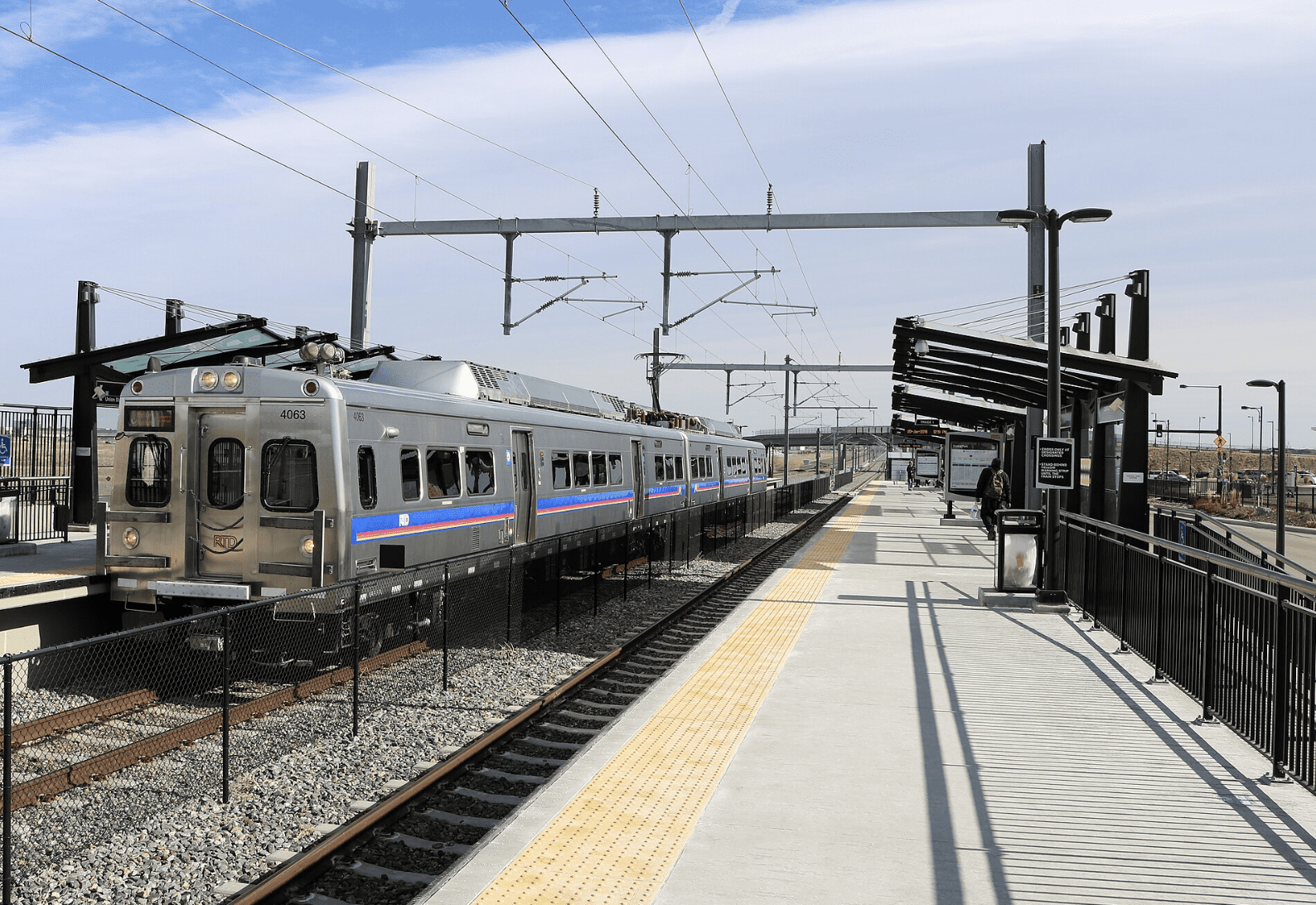
The approach taken by Forest City (now part of Brookfield Properties) and the Regional Transportation District (RTD) at Central Park Station in Denver was rooted in classic transit-oriented development (TOD) principles: concentrate the highest residential densities closest to transit, then transition gradually to lower-density housing forms as development moves outward into surrounding neighborhoods. The goal was to create a walkable urban center around the A-Line commuter rail station while still fitting within the broader character area. RTD’s TOD framework explicitly promotes “higher density new construction” within a five- to ten-minute walk of stations to reduce automobile dependence and support mixed-use, pedestrian-oriented districts.
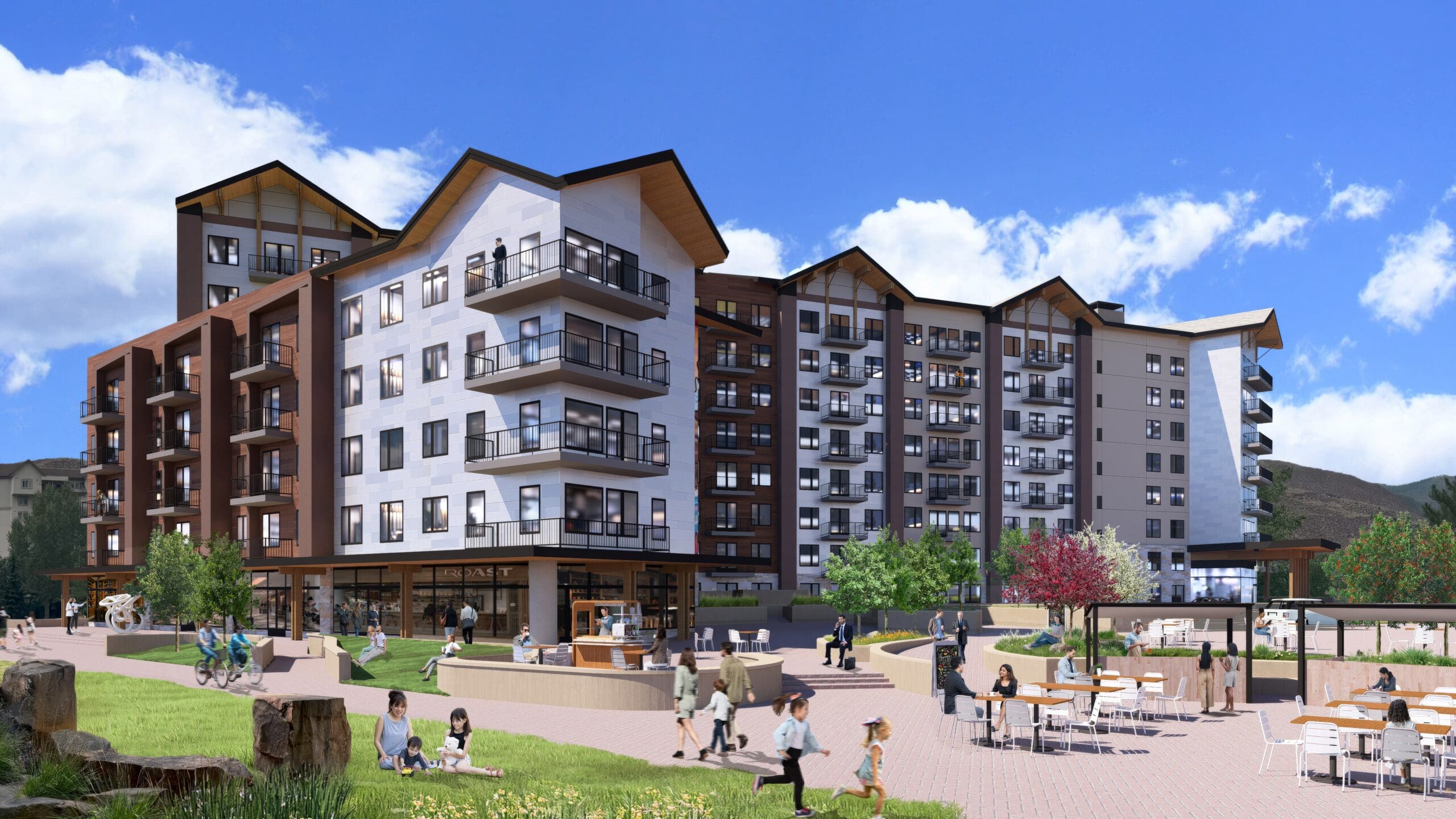
Rather than relying on a single housing type, the phased project intentionally layers multiple residential densities and building typologies. At the perimeter of the station area, the earliest phases of development transition from neighboring single-family neighborhoods to moderate-density residential forms, including condominiums, stacked flats, and build-to-rent townhomes. This “missing middle” transition strategy helped avoid abrupt changes in scale while still delivering substantial market-ready residential density near transit.
The parcels immediately adjacent to the station were designed as the highest-intensity zones, featuring mid-rise and podium apartment buildings with active ground-floor retail. These parcels were intentionally reserved for later phases of development, anticipating increased land value to support high quality for-rent and for-sale products. These buildings will reinforce the station as an urban center with strong pedestrian activity and minimal reliance on cars.
Housing diversity and affordability are key elements of the Central Park Station vision. Alongside market-rate development, RTD has supported mixed-income housing, including a current Design Workshop project providing 100% income-restricted affordable housing next to the station. The result is a more inclusive, walkable community that serves residents across a range of incomes, household types, and life stages.
The question facing Mountain West communities is not whether to grow, but how. The most successful transit-oriented neighborhoods will not be defined by maximum density, but by the right mix of housing, mobility, and community character. Thoughtfully scaled housing near transit can expand housing choice, improve affordability, support local businesses, increase ridership, and strengthen community identity. By right-sizing density around transit, cities can create vibrant, walkable neighborhoods that welcome new residents while remaining true to the landscapes, values, and lifestyles that define the Mountain West.